
Wells Somerset August 2017.
These pictures and text are from the slide show I produced following Irene and I visiting in 2017.

Hidden within the ancient ramparts and protected by the moat, there is 14 acres of tranquil gardens in the heart of the City of Wells, Somerset.
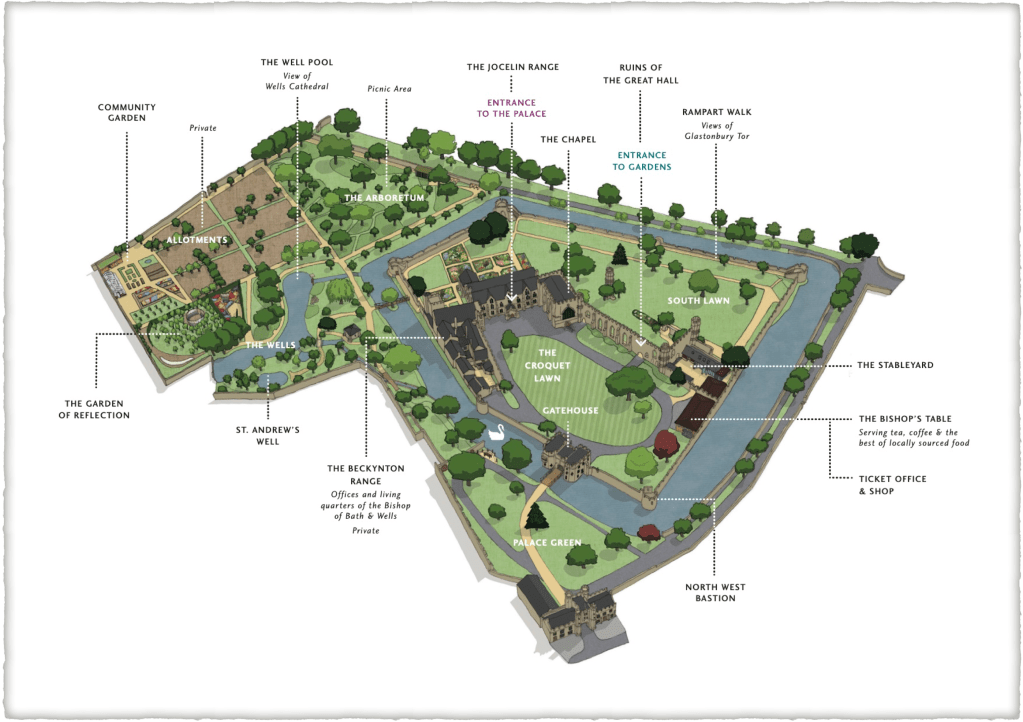
There is evidence that these gardens existed here even before Bishop Jocelyn began work on building the Palace c.1220. Over the years the gardens have changed as successive bishops have added their legacy and today these gardens in Somerset have Grade II listed garden status due to their special historic nature.
In 2016, these fine gardens in Somerset were acknowledged by the Royal Horticultural Society, by being made a “Partner Garden”. This status is awarded to gardens of “outstanding and exceptionally high standards of planting and design” – a great achievement for the team working under head gardener James Cross.
Entry is free some days to RHS members with starred cards (*). This offer is not valid on certain event days.
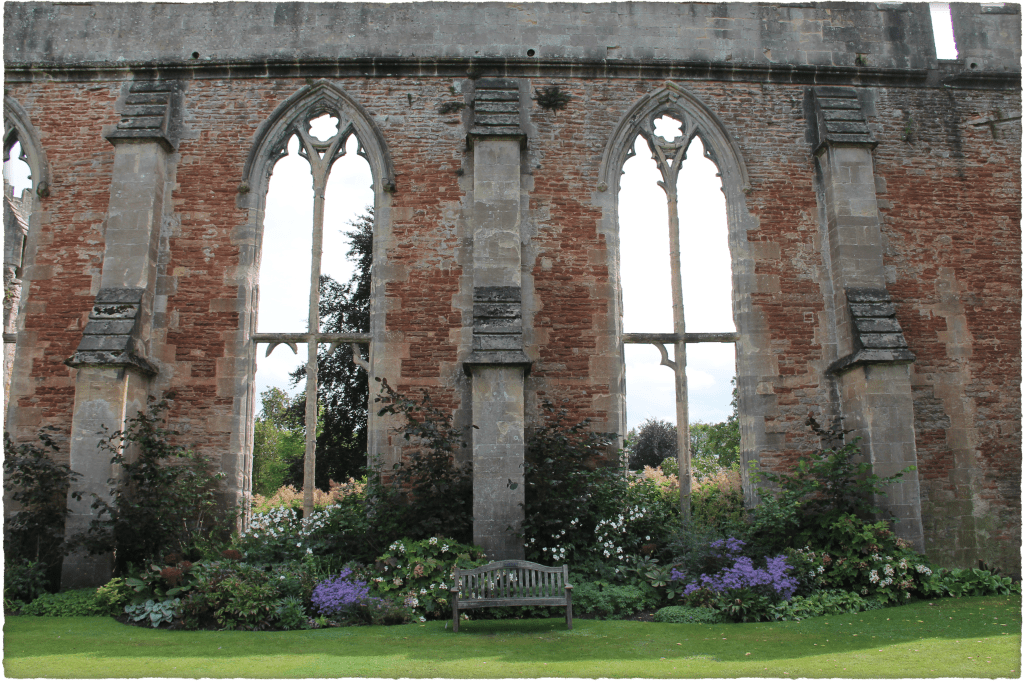
Looking through the ruins of the great hall, Into The South Garden.
In the 17th century this area was once laid out in the style of a formal Dutch garden with parterres including topiary and a distinctive L-shaped canal; virtually nothing remains of this garden.
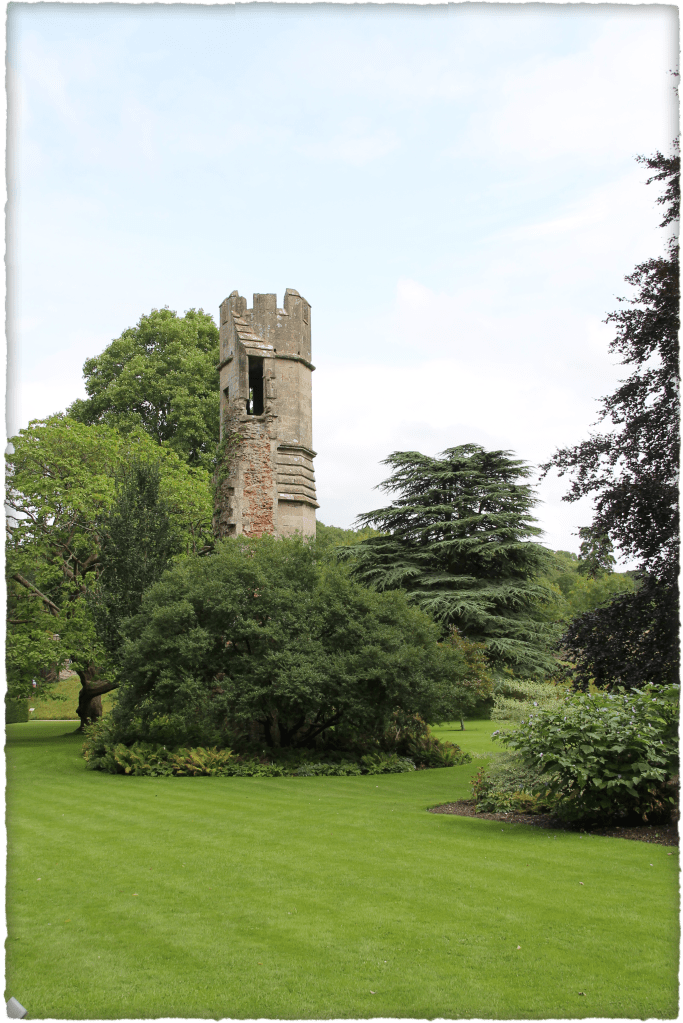
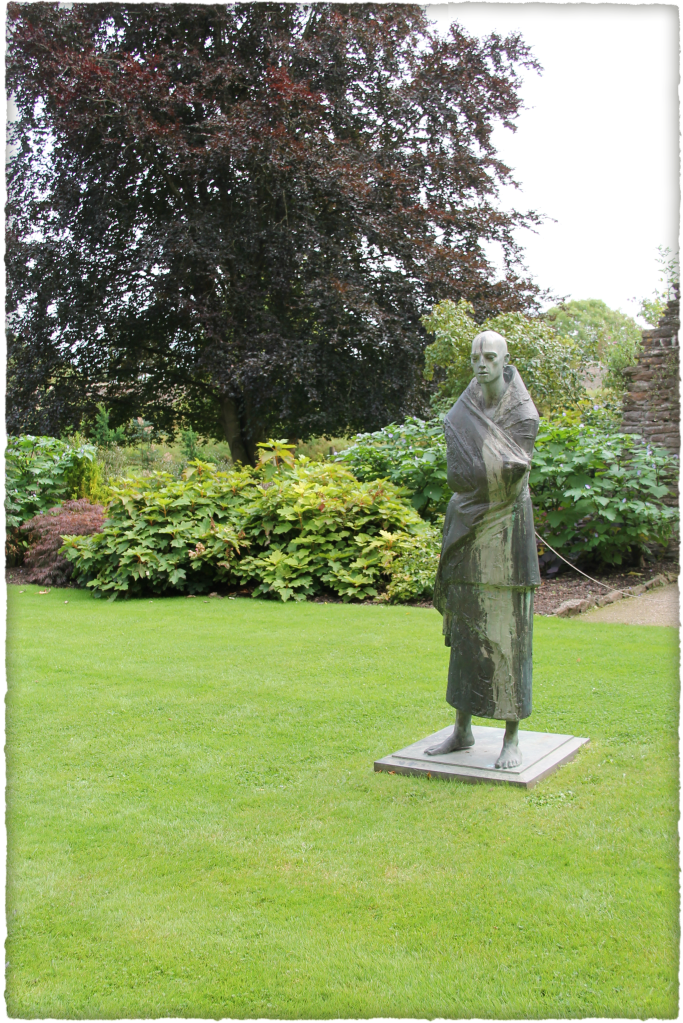
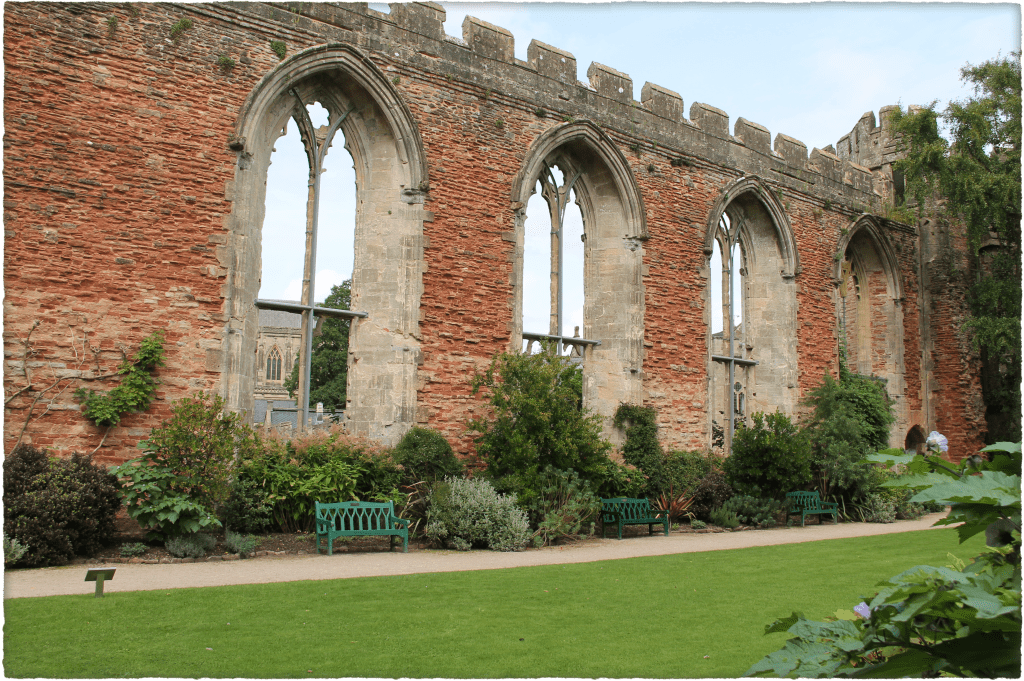
In contrast the picturesque and gardenesque style of garden, introduced from the second half of the 1820’s onwards by Bishop Law, is still here to experience. Under James Cross’ careful guidance and taking inspiration from old Victorian prints, the beds and borders around the Great Hall have been redeveloped to evoke the planting schemes of the time. Characterised by wide open lawns, specimen trees (such as Mulberry, Tulip and Indian Bean trees), flamboyant climbers, bold and luxuriant planting of shrubs and perennials.
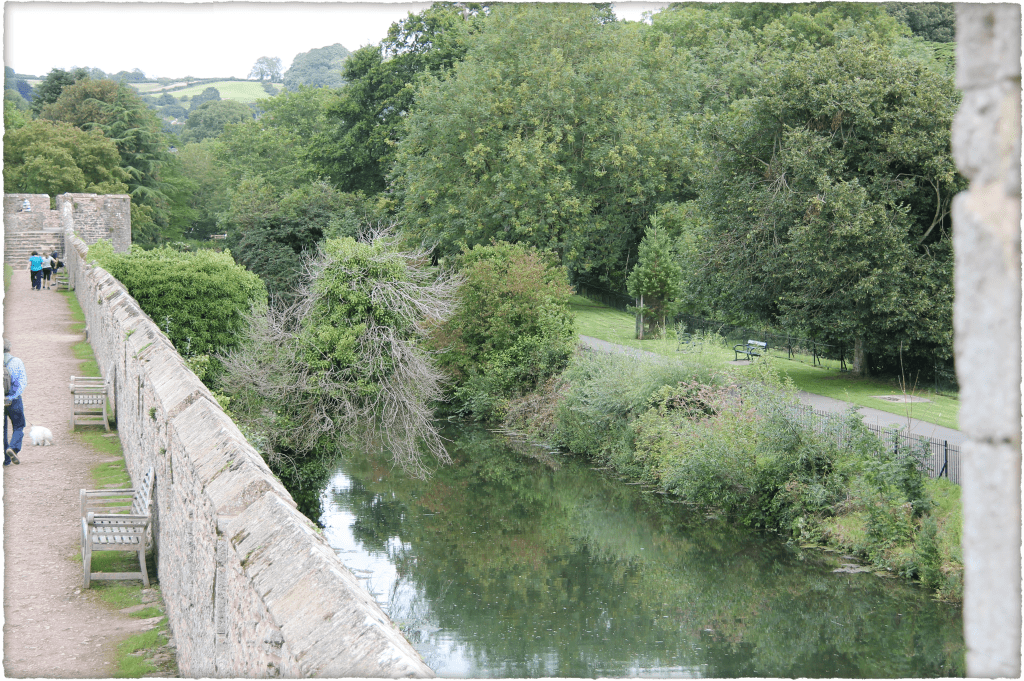
With the backdrop of the ruins of the Great Hall and surrounded by the ramparts, from which you have views of the moat and its wildlife.

From The Bishop Palace website: ” History of the Palace Swans
The tradition of Swans on the Moat at The Bishop’s Palace and Gardens in Wells is thought to go back to the 1850s when it is likely that a Bishop’s daughter first taught the swans to ring a bell at the Gatehouse for food. We now have two swan bells – one just beneath the window on the left of the Gatehouse, the other to the right – with a rope hanging down for the swans to pull.”
The Arboretum.
The Arboretum was designed by Sir Harold Hillier for Bishop Bickersteth and created in 1977 in commemoration of HM the Queen’s 25th Jubilee. It replaced part of the old kitchen gardens, This is a lovely place for children and adults to explore, picnic and play in – and the “Dragon’s Lair” is an interactive play space for primary and pre-primary aged children within these Gardens in Somerset.
The Dragon’s Lair.
Legend has it that during the 13th century, Somerset was terrorised by a frightful dragon who liked to eat milkmaids and other unsuspecting villagers. Bishop Jocelyn, who built The Bishop’s Palace, bravely ventured out to kill the dragon. After a mighty battle, as the dragon breathed its dying breath, it cast an eternal curse on the villagers: that if they ever forgot about it, the creature would return every 50 years….This interactive discovery area is designed around the themes and stories of the Palace, an outdoor natural activity space will exercise both minds and bodies with a pole jungle, tree pods, a waterwheel and pump. The only question is: Dare you enter The Dragon’s Lair?

The Wells Garden.
You cross the moat via the bridge to discover the wells from which the City gets its name. This area has been transformed into a peaceful space with lawns, flower borders and shady pools containing the water gushing up from the springs.
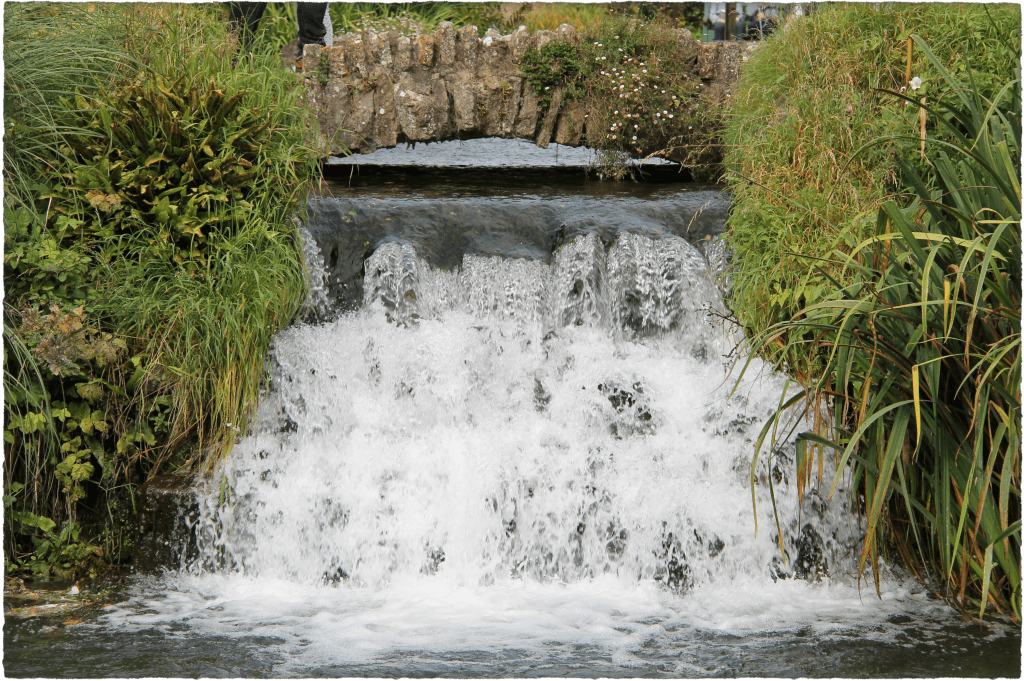
You can walk over the boardwalk and peer down into St Andrew’s Well where you may see the bubbles from the spring emerging at the base of the pool.
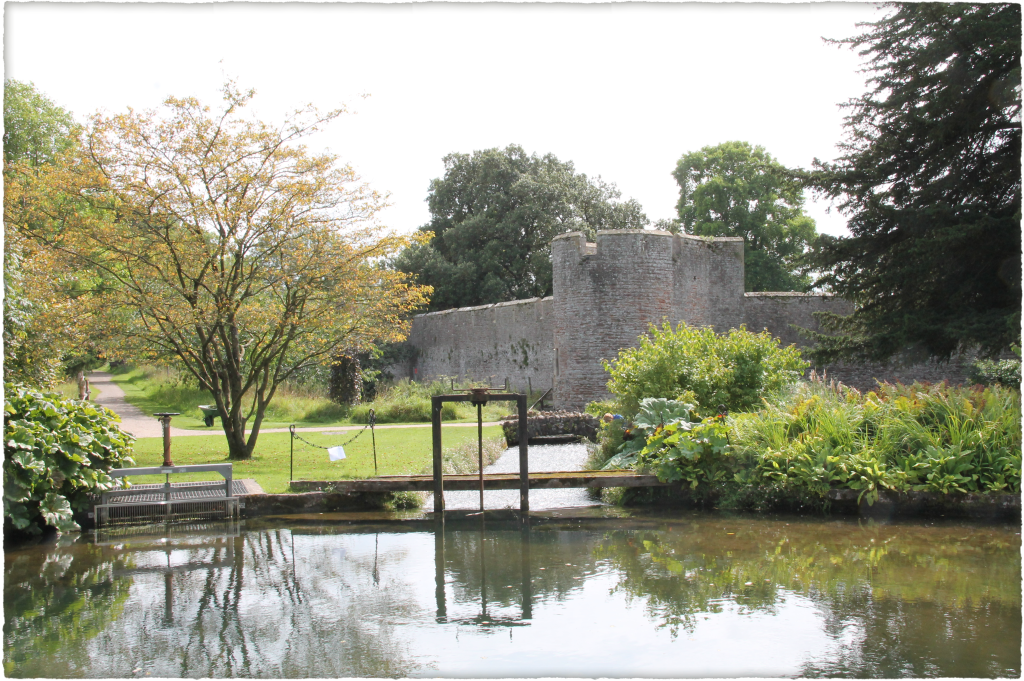
Here are shade and damp-loving plants such as astilbes, ferns and hostas.
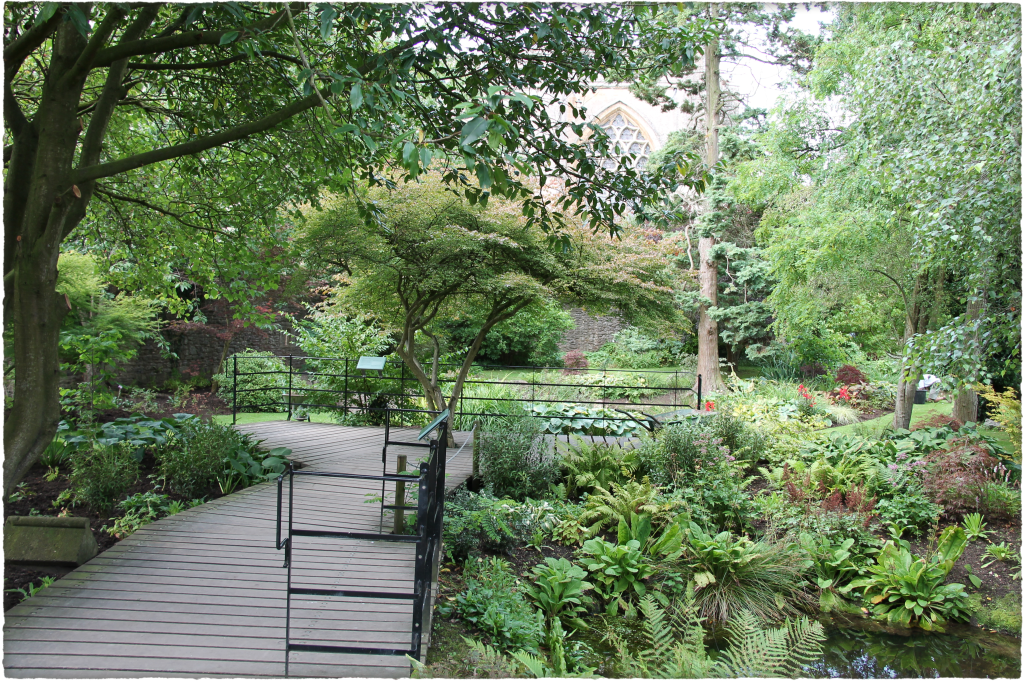
Next to the Water Wheel are borders where the choice of plants has been influenced by the damp garden in the well-known Beth Chatto gardens in Essex.

Plants such as Iris, Rheum, Candelabra Primulas and Rodgersias are abundant here and the luxurious and diverse foliage creates drama and structure.
The long border winding alongside the biggest pool was originally designed by Mary Keen. Replanted in Spring 2016, much of Mary’s trademark style of mixing small and larger plants together has been intentionally kept whilst at the same time refreshing the border to provide a longer seasonal interest; it is full of herbaceous plants, shrubs and roses. You can just see a reflection of the cathedral in the second picture.
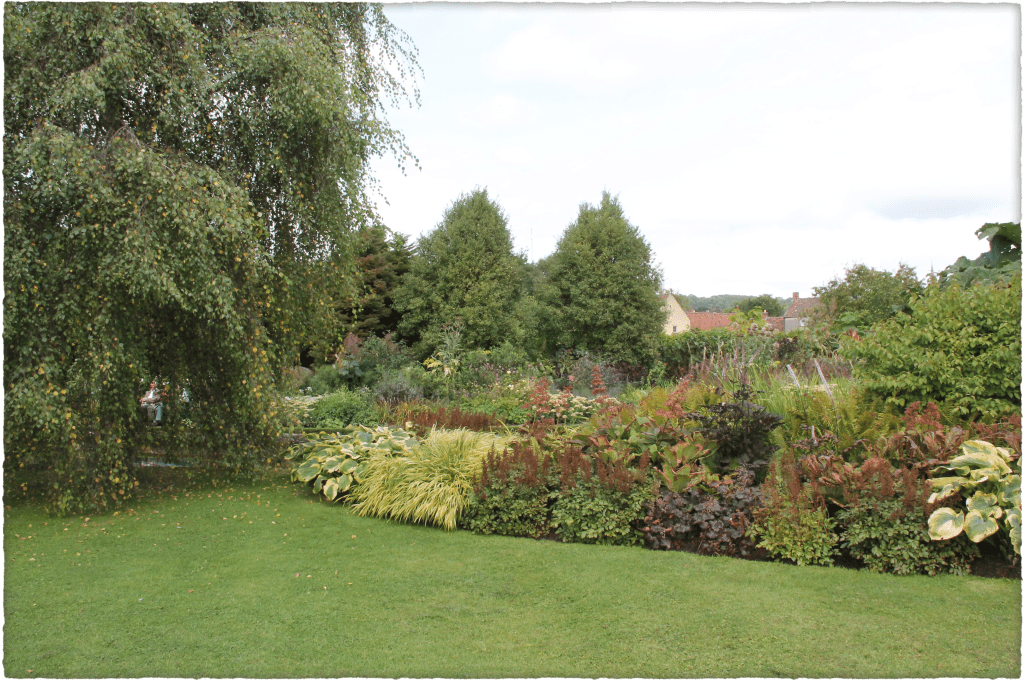
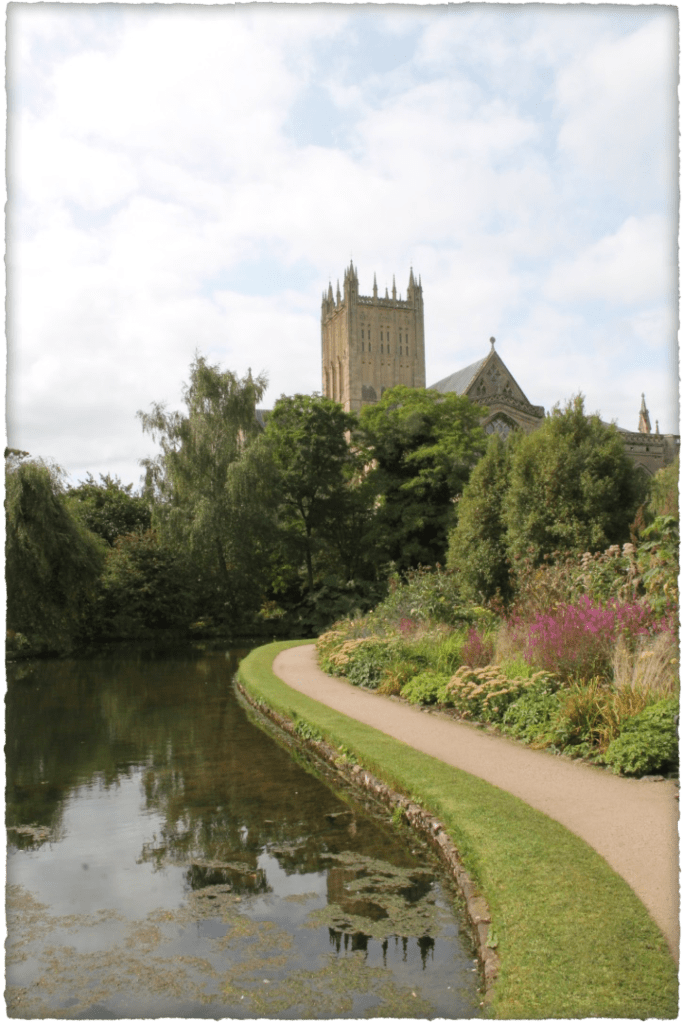
Adjacent to the well pools can be seen the ancient Well House built in 1451, part of the water system which was set up by Bishop Beckynton to provide fresh water to the townsfolk.


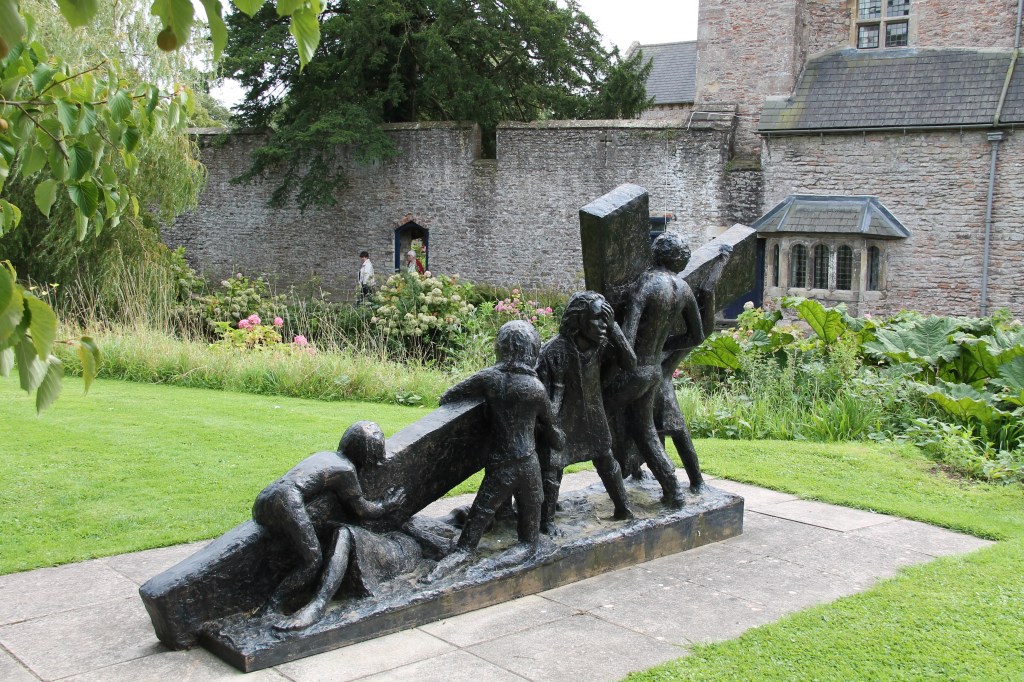
The Quiet Garden.
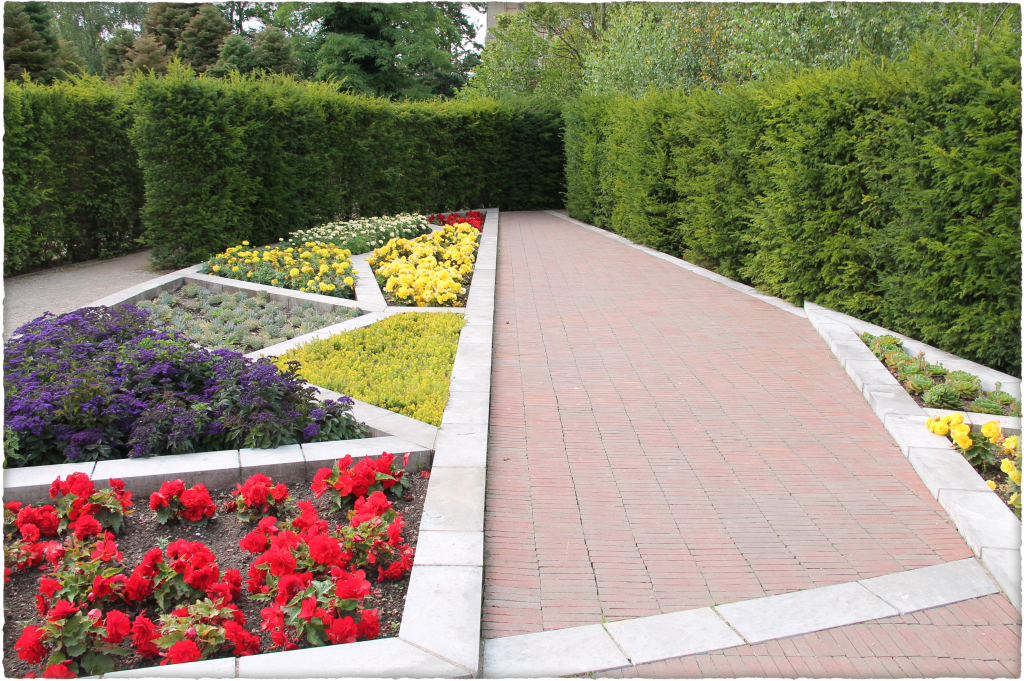
Walk behind high yew hedges beyond the well pools and past a colour garden representing the stained glass window in the Lady Chapel of Wells Cathedral and you will discover The Garden of Reflection.
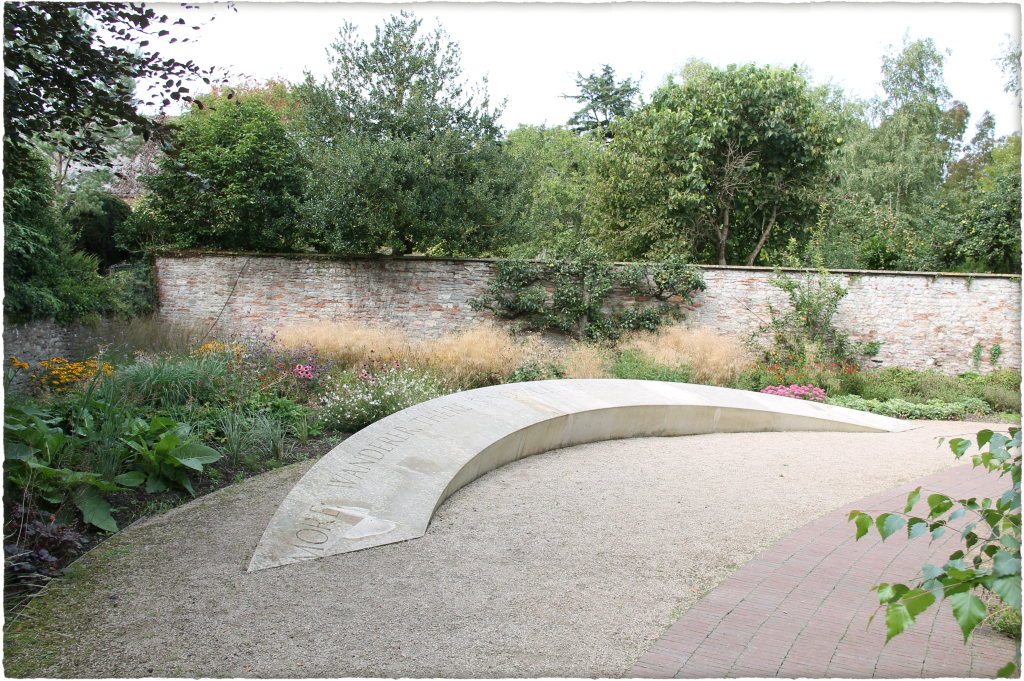
In contrast to the rest of the Palace gardens this is a modern and contemporary garden. It was opened in 2013, replacing a former derelict space and kitchen gardens, and was the inspiration of Bishop Peter Price and his wife Dee. Within this peaceful space you can rest a moment on the sweeping 40ft stone seat and take in the contemporary and restful planting of grasses and perennials,
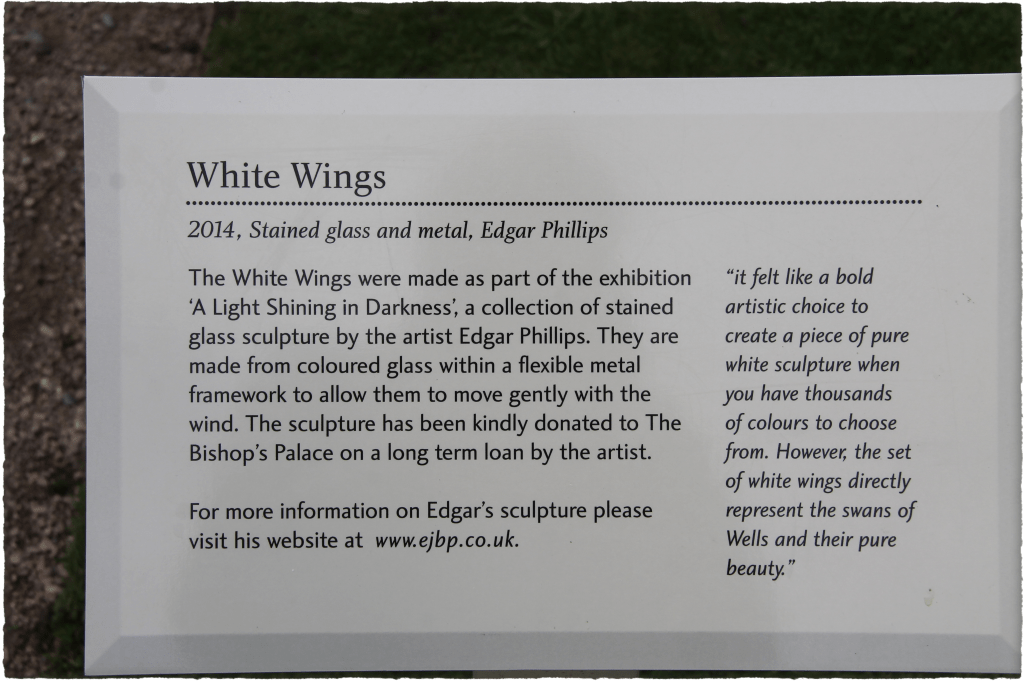
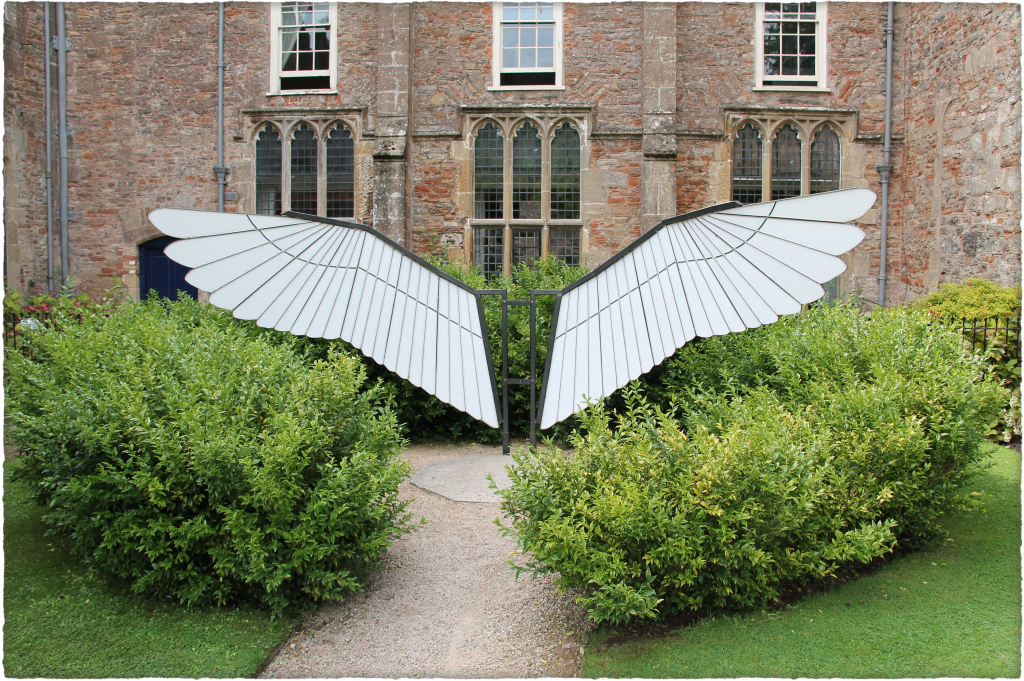
White wings by the artist Edgar Phillips.
The East Garden.
This is the place to enjoy the scent of roses and appreciate the huge diversity of hardy perennials flowering from summer and well into the Autumn.
Here you can find the parterre which still has at its centre the original urn dating from the former parterre laid out in the mid-1800s;
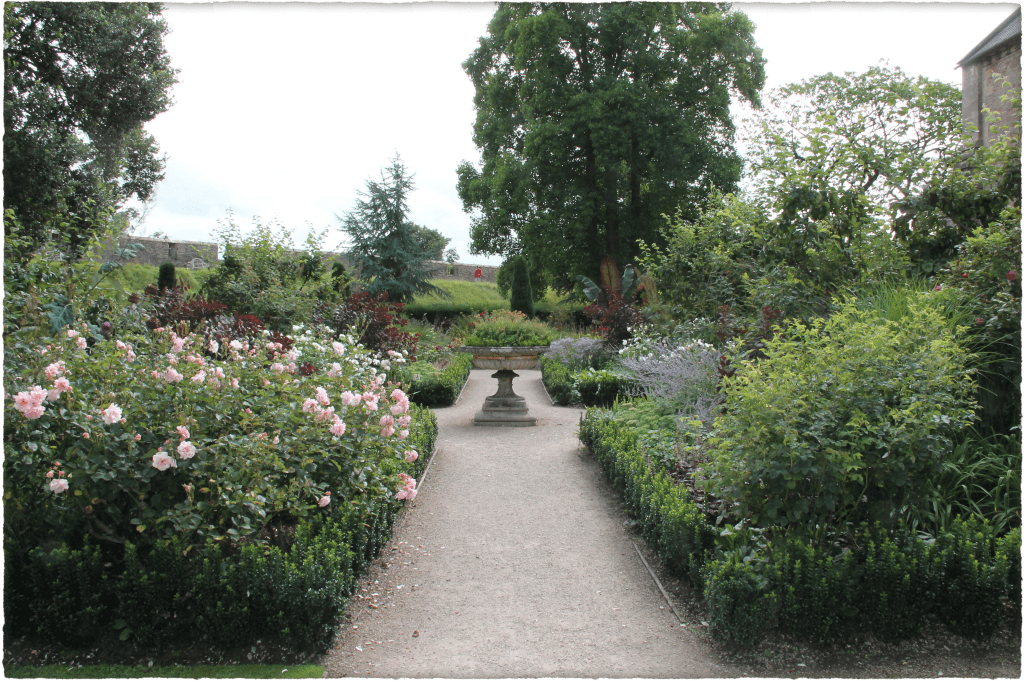
There are four rectangular beds and a long one planted as mixed borders with shrubs, roses and perennials edged with box. The long border is the The ‘hot border’ a riot of vibrant colours with Musa basjoo Japanese banana and is structured with tall, bright Crocosmia lucifer.

Achillea ‘Cloth of Gold’ at the back, separated with blue Echinops and Helianthus ‘Lemon Queen’ that flower into September and ornamental grasses. There are also Irish Yews planted in memory of the twelve ‘Apostle Yews’ which stood here in the 19th century parterre.

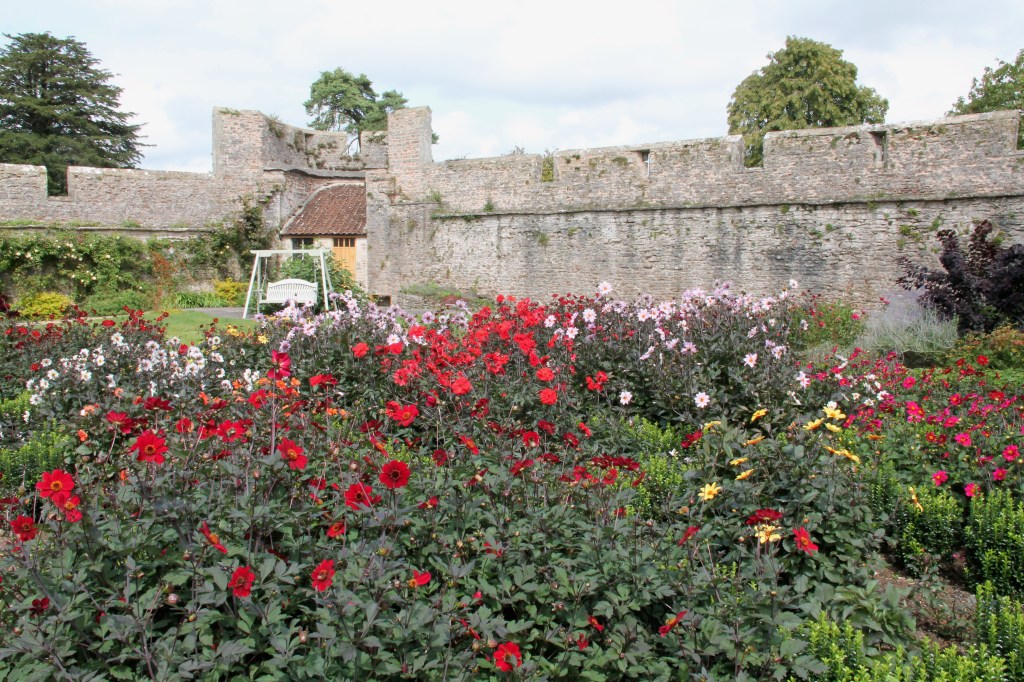
The swing seat is in front of the apple store with a lawn edged with Dahlias, the one in the centre of the picture is different from all the others used in the garden
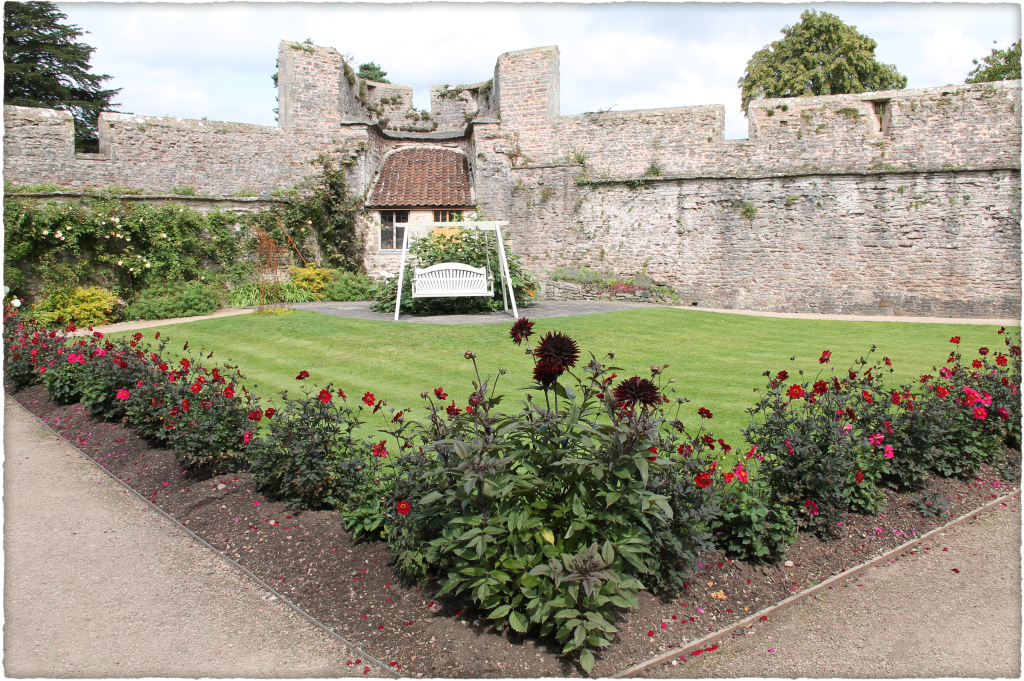

It is dahlia Karma Choc.
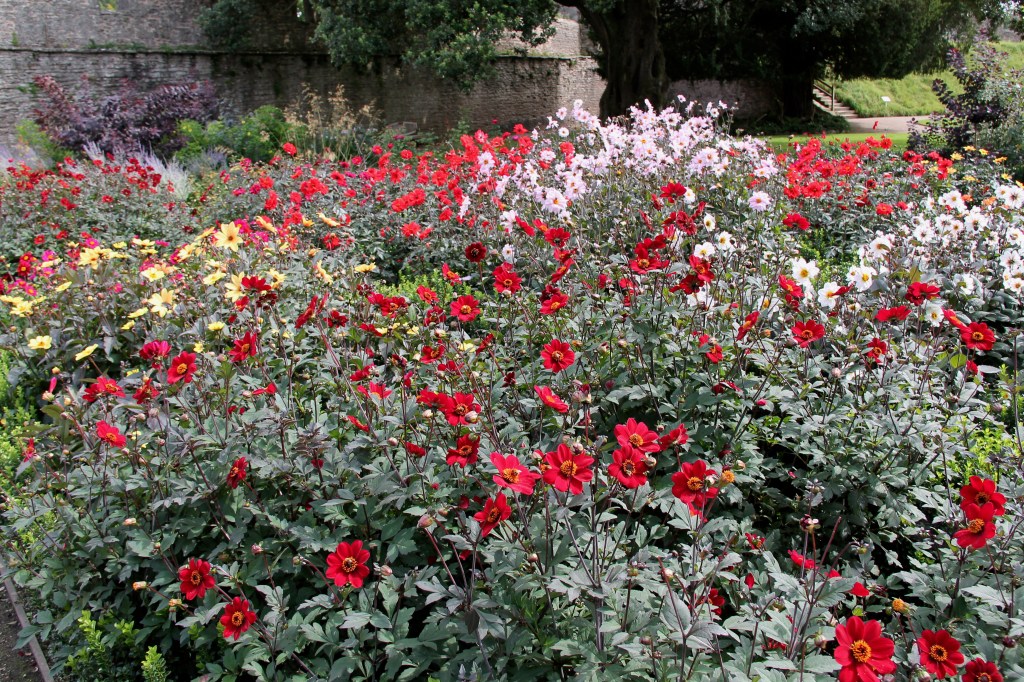
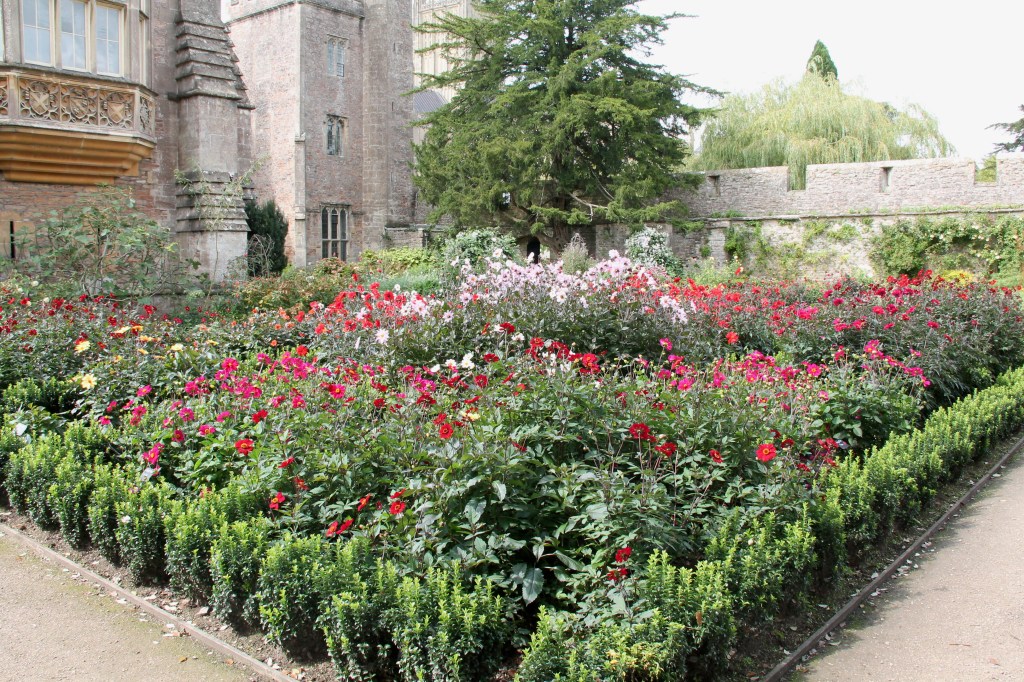
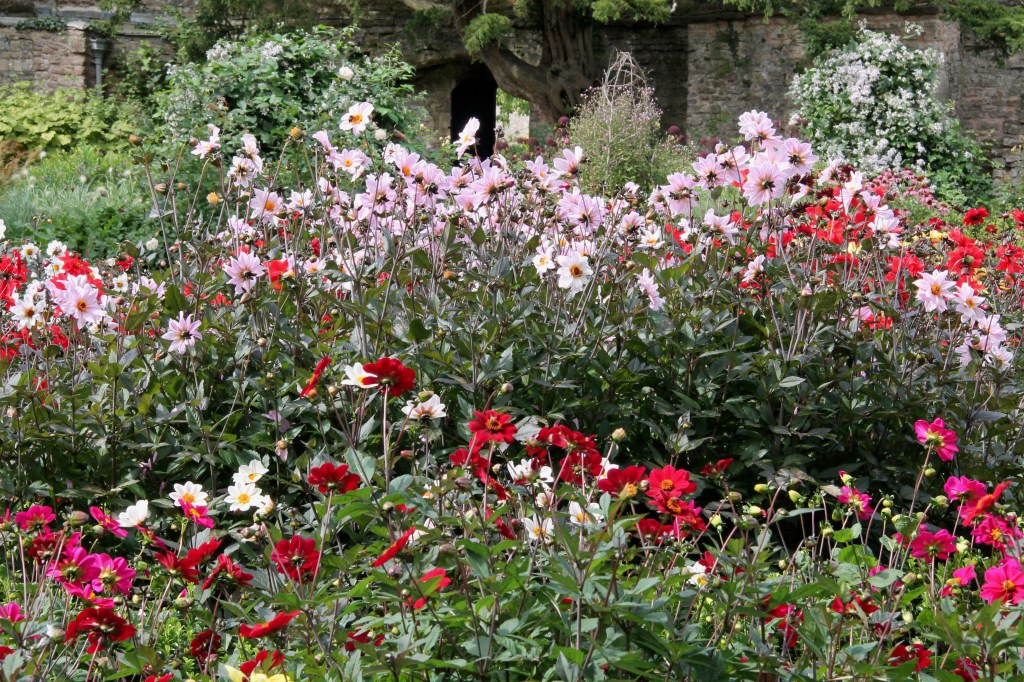
The dahlia beds feature the wonderful Bishop Dahlias. I understand these have all been bred from Bishop of LLandaff, which was once thought to have been lost. It is the Dahlia that has done more to make them a popular garden plant again. They do make an impressive display planted in mass here in the palace gardens.
Bishop of LLandaff (red) Bishop of York (golden flowers),Bishop of Canterbury (cerise purple) and Bishop of Dover (white with a hint of lilac). Bishop of Leicester (pale pink). Please click on the arrows for a slide show of the dahlias beds.
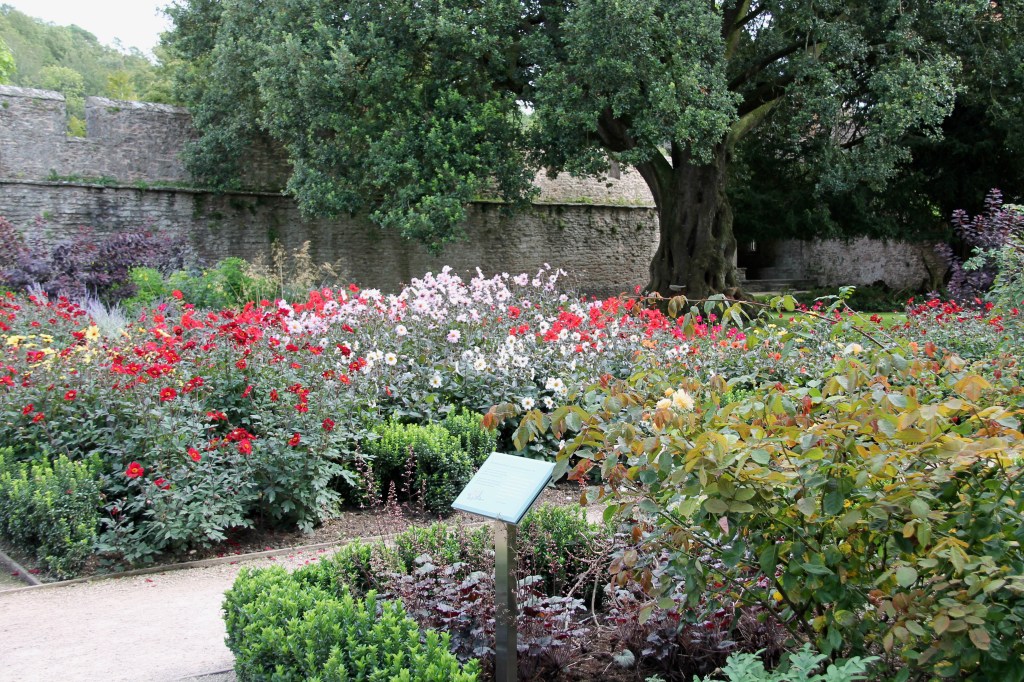

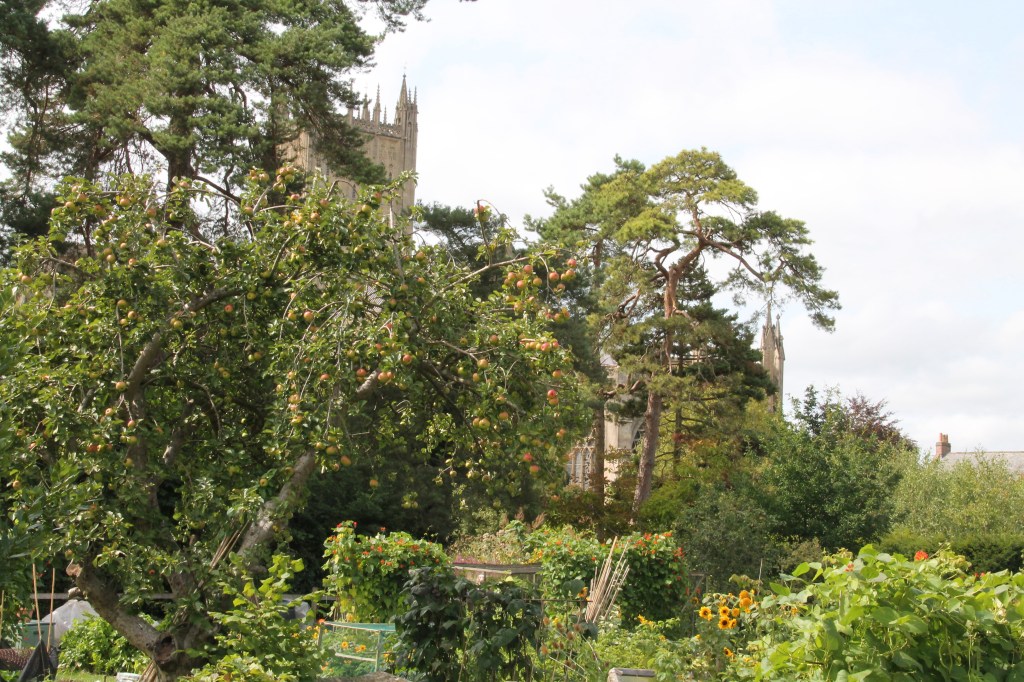
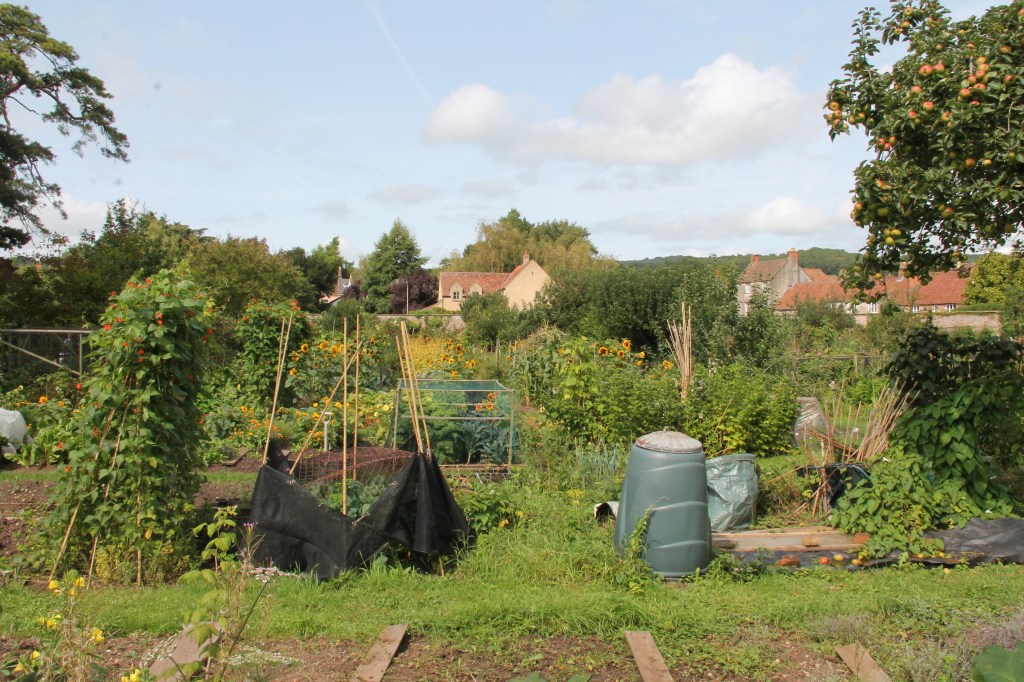

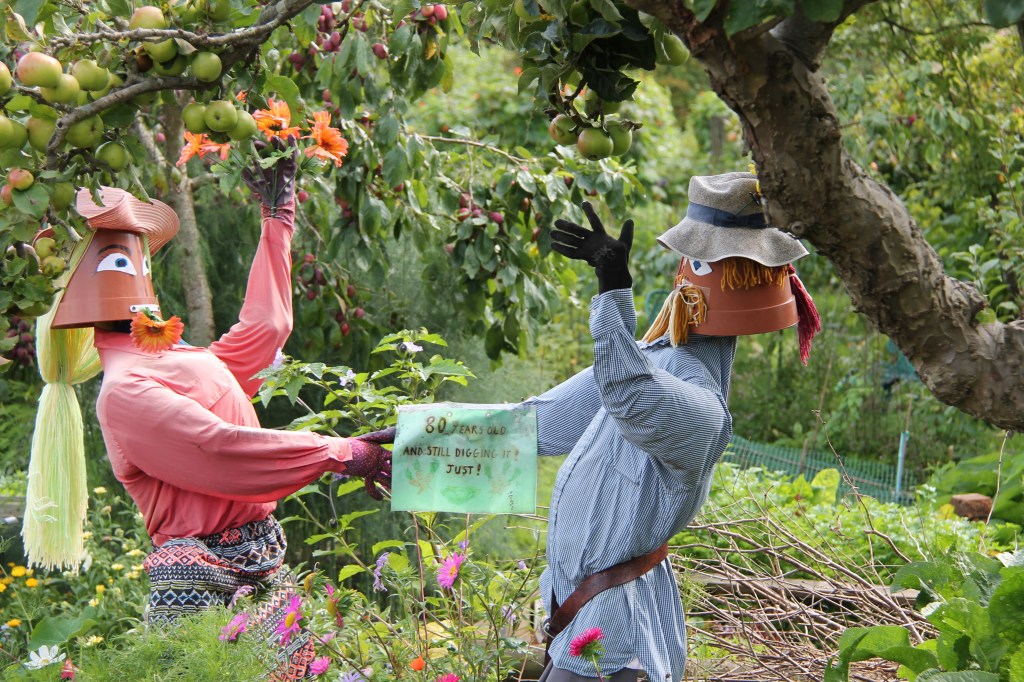
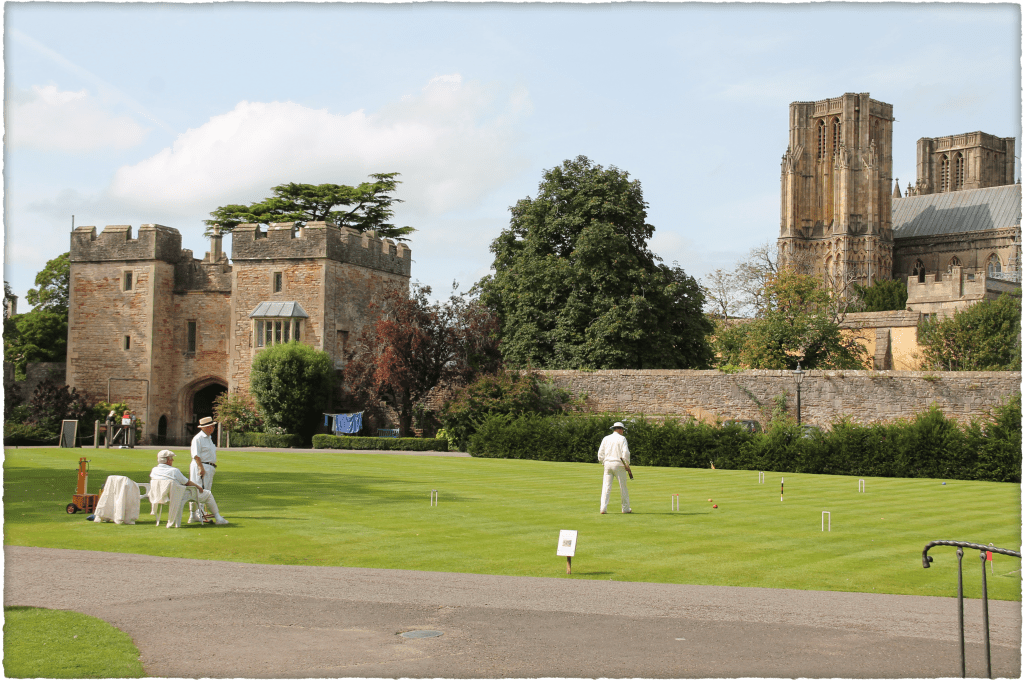
You can sit outside The Bishop’s Table cafe with your coffee and cake watching a game of croquet.

Wells Cathedral.
Wells is a vibrant lively city to visit with plenty of cafes and restaurants, it is not intended as a pun but ‘well’ worth visiting.
Our Garden Club The Black Pear Gardening Club visited the gardens this August I will be posting some of their pictures on their website: blackpeargc.org.uk.

 brimfields.com
This as you probably know is ‘my local garden’, a easy walk from home, so should you need any more pictures, I would be very happy to go there and take some for you.
LikeLiked by 1 person
I wish I lived closer so I could visit more often.
LikeLike
It is a privilege.
LikeLiked by 1 person
I have such fond memories of Wells from a student field trip back in 1975 or so but there was no time (nor inclination, I expect!) to think of gardens back then and, when the Golfer and I visited Wells briefly many years later there was some reason why we couldn’t visit them, maybe the day of the week perhaps, and they remaon very much on my wish list. I had no idea they were so extensive though, even with Noelle’s posts about them – so thanks for this thorough exploration Brian!
LikeLike
My pleasure Cathy, Wells itself is worth a visit as well.
LikeLiked by 1 person