
I have been writing gardening articles for our village magazine, The Parish Link, since February this year. I have now decided to publish them here following their appearance in the magazine. This will serve as a record for me. Some parts of the articles may have been covered here before; I apologise for any repetition
Febuary.
CUT, DROP AND MULCH. (Not Put to Bed.)
An article about the Millennium Garden at Pentsthorpe Natural Park in Norfolk, caught my attention because we had visited the garden in 2012. This garden was designed by Piet Oudolf, the internationally famous Dutch nurseryman and garden designer, known for his prairie-style planting. Historically, here in the UK, gardens were said to be put to bed in the autumn by cutting everything down and removing it to the compost heap. Within the Millennium Garden, the many perennials and grasses were not cut down until February, to provide winter shelter for insects, and then removed to giant compost heaps. According to the article, they now cut it all down into small bites or pieces, leaving it on the ground as mulch to continue providing homes for wildlife while improving soil fertility and water retention.
While I do not claim the blue border in Our Garden@19 to be ‘prairie planting’, it does contain perennials and grasses so I decided to experiment with cutting it down in small bites, leaving it as a mulch. I originally did this using garden shears, I now use a hedge cutter.
I added my usual mulch of leaf mould/council-recycled compost on top of this in March. I only apply a thin layer as I do not wish to smother the desirable self-seeding plants. If you have a self-seeder you do not want any more of it is worth consigning just the seed heads to the recycling bin.
I have now done this for several years, and I don’t think it will suit the tidy gardener. However, the worms will work it into the soil, improving it, and the growing plants soon hide it, and we are constantly being advised that, as gardeners, we should be a little more untidy to help the wildlife. A recent local convert to this practice is Old Court Nurseries in Herefordshire.
An extract from my website brimfields.com
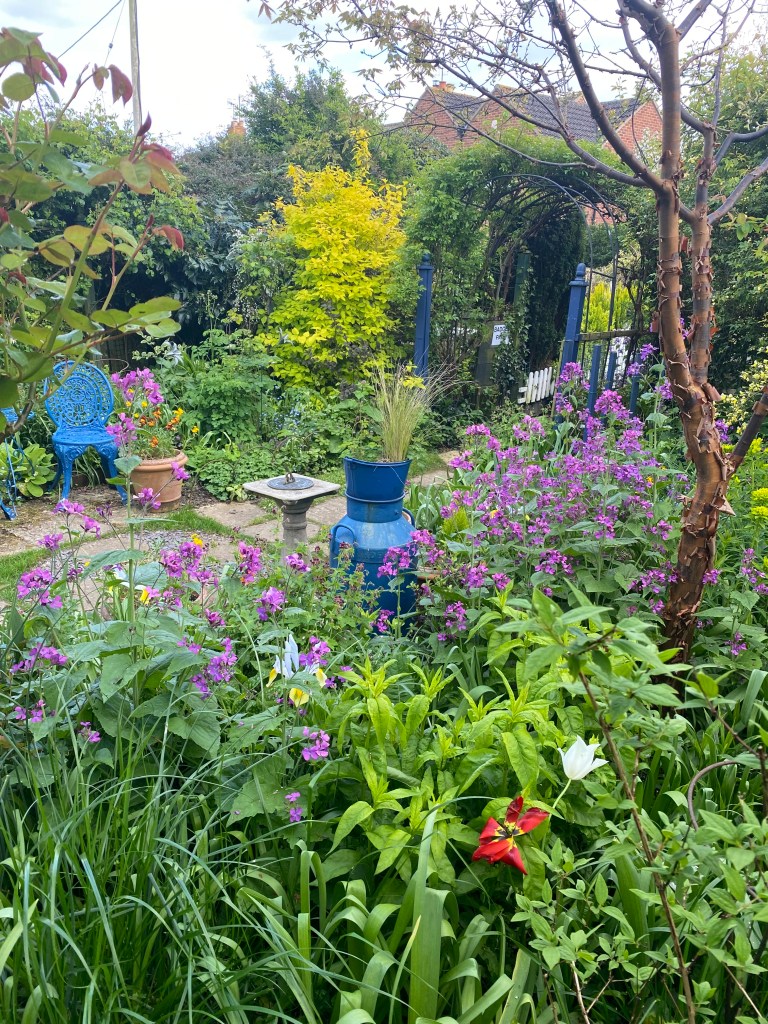
Picture The Blue Border in April 2024 no sign of the mulch.
March.
Guide to seed sowing in March.
March is the main time for seed sowing in the garden it is a rewarding and relatively economical way to propagate plants. If you asked any gardener how to sow seeds, you would probably receive a different answer from each one. These are my current thoughts on the subject.
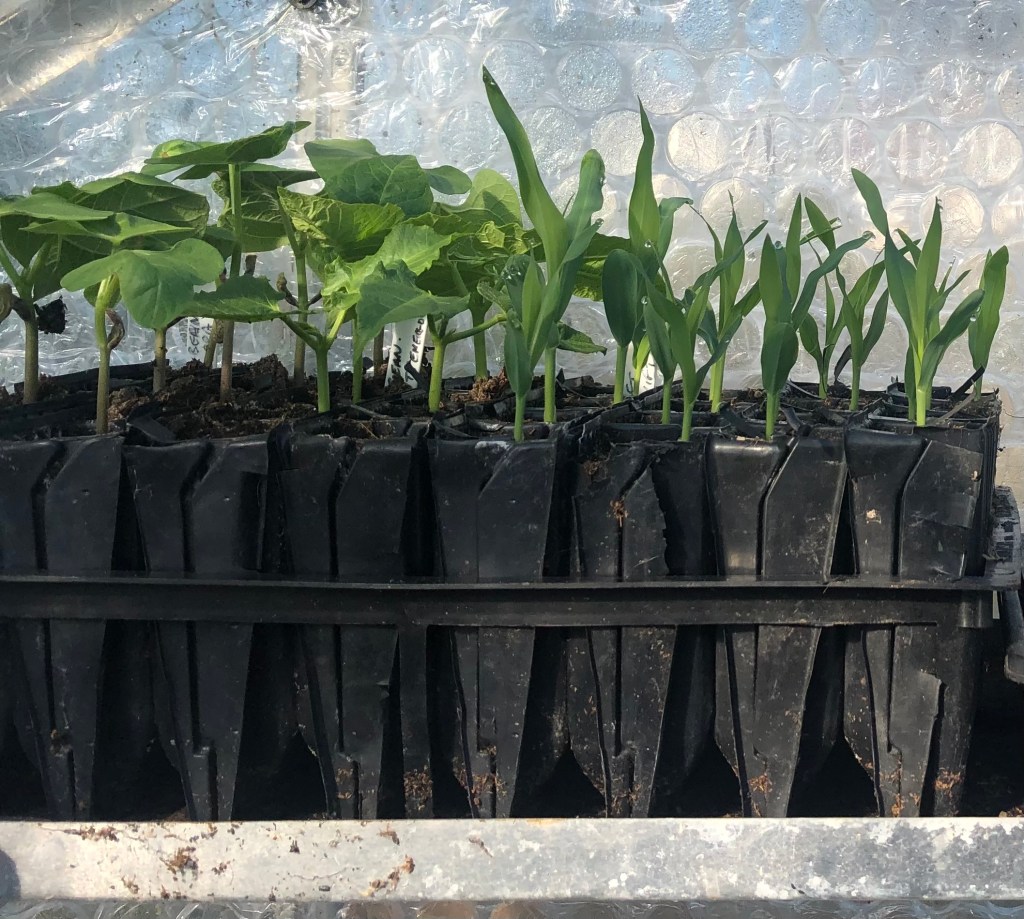
First, select your containers there is a wide range of pots and trays for seed sowing, generally, I prefer small pots rather than seed trays because they provide a deeper root run until you get round to pricking out the seedlings. I also use root trainers; the large ones are useful for growing sweetpeas, beans, and sweet corn, and they save the need for pricking out. You can buy smaller ones, ideal for starting vegetables such as lettuce or annual flowers. These open like a book, so you can then slide out the seedling roots and compost directly into your garden or pot. A free alternative is to use toilet-roll inserts, which can be planted directly in the garden.
With the move towards peat-free compost, gardeners have reported mixed results. I have experimented with different composts, which has led me to now use John Innes compost, which is loam-based. These have been reformulated to be peat-free. They have better nutrition and water retention qualities than peat-free multipurpose compost. I use the one specifically for seed sowing, which I top-dress with a little vermiculite or grit, which helps prevent seedlings from damping off. This is also an ideal compost for propagating pelargonium cuttings. I use John Innes number 1 for growing on and for larger seeds sown in root trainers when more nutrition is required. If you only wish to buy one, choose number 1 and mix in a quarter of vermiculite to reduce the nutrient level for seed sowing. I have found the quality of the Melcourt range, recommended by the RHS, to be the most reliable.
It is important not to water from above, as this can wash the seeds into a corner of the pot, causing over-crowding, and when they have germinated also cause damping off. I have a water tray that I stand the pots in, allowing capillary action to draw the water up.
It is important to have viable seeds you can test old seeds by germinating them on a damp paper towel in a warm place. Many seeds will be viable for years; see the seed bank managed by Kew Gardens.
I store mine in a plastic container, with some dry rice to absorb any moisture, in the fridge. The recommended depth of sowing varies; this is usually printed on the seed packet.
When it is time to pick the seedlings out, I gently tip the whole pot out onto the bench, allowing the seedlings to fall apart. It is important not to let them get too big before you do this. When you see the true leaves, this is the ideal time; it allows you to hold the seedlings by their cotyledon leaves, never by the stems.
I hope this helps you to economically produce a productive and attractive garden.
Root trainers planted with beans and sweet corn.
April.
Container vegetable gardening.
I have decided to grow some vegetables this year; I haven’t grown any for a while. With limited space in the garden, some plants will be grown in containers. When I grow vegetables, I like to choose varieties that offer something different or a different colour than the usual ones. With this aim, this is my selection for this year.
Climbing Borlotti Beans, Dwarf French Bean, Purple Queen, Climbing Purple Bean, “A Cosse Violette”, Swiss Chard Ruby Red, Courgette “Banana Song”, Broad Bean Crimson Flowered, and Cut and Come Again lettuce.
The climbing Borlotti beans produce red-striped pods; the beans can be used fresh or dried. As the names suggest, the climbing Purple Bean and Dwarf French Bean have purple pods that turn green when cooked. The two climbing beans will be grown on supports at the edge of the raised beds. As its name implies, the courgette is a yellow variety, and the Ruby Chard always adds some colour. I will make a second sowing of the Chard when the beans have finished in their pots to utilise the nitrogen fixed by the legumes. You can buy colourful selections of cut-and-come-again lettuce seed. There are blends of different loose-leaf cutting lettuce varieties. I like a blend of light green, dark green, and red lettuce of different textures, colours, and shaped leaves. The beauty of these is that you just cut a few leaves as you require them and they regrow.
I have always liked the concept of growing vegetables in a French Potager since I visited Rosemary Vera‘s Garden many years ago and was blown away by it. The raised beds in my garden were originally designed for this purpose. To create an image of this with pots, I will add pots of colourful annual flowers among the vegetables.
I will plant the seeds in root trainers transfering them to the pots when they have established a good root system.
Melcourt multi-purpose compost will be used in the pots; this will provide feed during the first few weeks. I will then use a liquid feed. I like the Maxicrop organic liquid seaweed range for feeding pots. Their tomato fertiliser, with 4% nitrogen, 2% phosphorus, and 6% potassium, will be used on all the vegetables except for the Swiss Chard. I also use this on any flowering plants in pots that require a feed. The Swiss Chard and lettuce will have their all-purpose one with an NPK of 5:2:5, ideal for leaf growth. I look forward to a bumper colourful harvest later in the year.
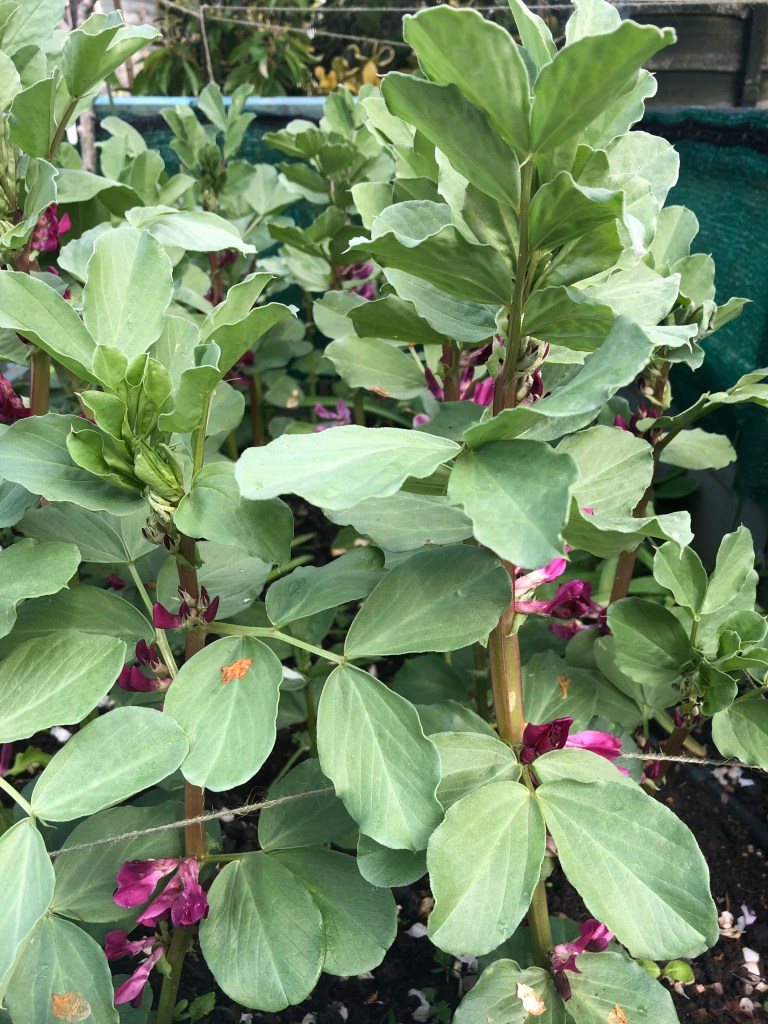
Broad Bean Crimson Flowered.
May
I have posted this article previously on here.
Benefits of Sharing Your Garden with the Community.
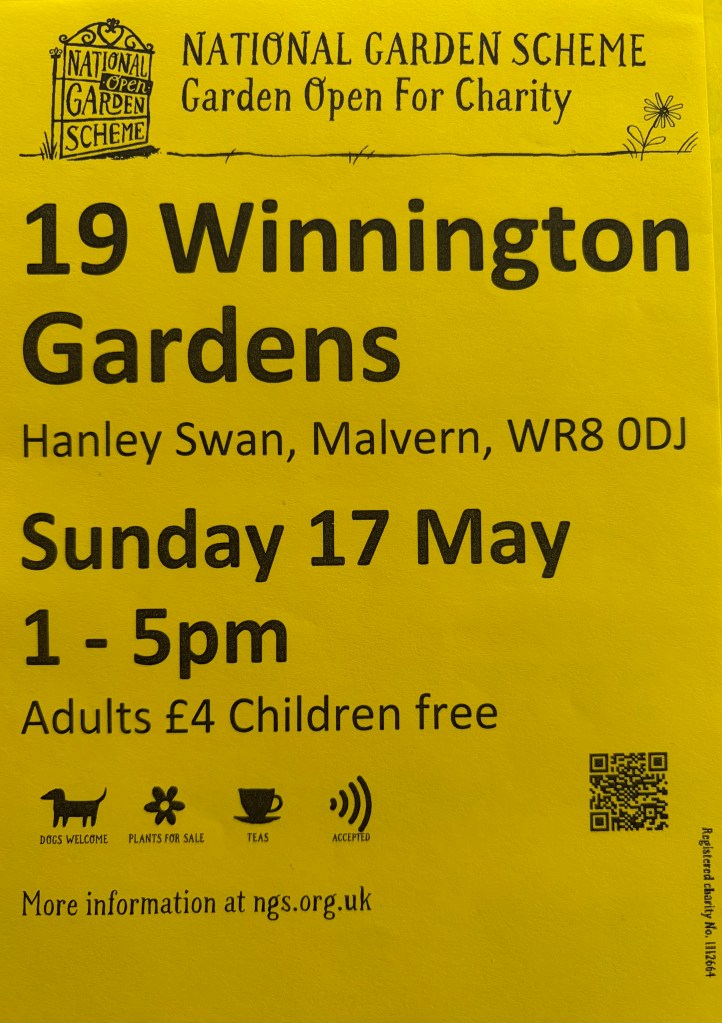
It is a commitment to open your garden to the public, either for the local Church or the National Garden Scheme. However, it can be gratifying to share your garden with fellow enthusiasts, with experience flowing both ways. I think it also helps to increase the community spirit we have in this wonderful village. I have found visiting gardens to be one of the main sources of ideas for my own garden.
Opening for the NGS requires any garden to demonstrate a certain level of horticulture and provide between 35 and 40 minutes of interest. If you wish to open, your garden will be inspected by the County Organiser or another volunteer before it is accepted and published in the famous Yellow Book. Our garden passed the inspection over ten years ago, and as the group co-ordinator, this is now my responsibility for the Hanley Swan Group. It is not as daunting as it sounds; we have an excellent County Organiser in Worcestershire. You may sometimes receive advice on what may need to be done to be accepted. As a garden owner, you choose the dates and times you wish to open and agree on an entrance charge with the County Organiser. This income goes to the NGS. Plant sales and refreshments are optional extras that can be donated to the National Garden Scheme or another charity of your choice. I am sharing the refreshment income with the local British Legion branch this year for the group opening, one thing less for me to organise. Each county team is run by volunteers, who, besides inspecting gardens and producing publicity, increasingly on social media (my volunteer role), also produce the gardens open booklet for the county. These can be found at local garden centres, tourist offices, and libraries. Open gardens information can also be found on the website: NGS.org.uk
Over 3,000 gardens open annually for the National Garden Scheme. 2025 was another landmark year for the charity, with a record £3,875,596 donated from funds gathered at garden openings throughout the year. The donations helped thousands of people living with cancer, Parkinson’s, poor mental health, or the pressures of unpaid caring by supporting the nurses, health professionals, and case workers who care for them. The NGS is supporting the Restorative Garden Project at Upton Surgery. Next year, the NGS will be celebrating 100 years of raising money for charity.
Whether opening or visiting gardens this year, enjoy your time.
June.
June Roses.
June is when the English Garden is believed to reach its peak. This is mainly because it is the height of peony and rose blooms, staples of the traditional English garden.
Many consider the rose to be the plant of the month for June. There are numerous varieties to choose from—species roses, carpet roses, hybrid tea, shrub roses, standard roses, rambling roses, and climbing roses. It’s important to select the right one for your situation. Note that rambling roses are extremely vigorous and only flower once; for example, Rambling Rector can grow over seven metres, whereas climbing roses are less vigorous and can bloom multiple times. November is the best time to plant roses; I will write more about rose care then. However, with container-grown varieties now available, you can often see them flowering at the nursery, which helps in choosing your favourite. When planting your rose, it’s worthwhile to add a small amount of compost to the hole to aid moisture retention. Water well, then add a mulch around the rose. Farmyard manure has traditionally been used as a mulch for roses, but caution is advised as it can contain weed seeds. I used it many years ago and ended up with couch grass growing through the roses! For repeat-flowering varieties, deadheading encourages further blooms. Newly planted roses need regular watering throughout the summer. I admit to having a love-hate relationship with roses, especially during pruning time when dealing with all the thorns. If I had to pick a favourite rose in my garden, it would probably be “American Pillar,” which came from my grandparents’ garden and holds a special place.
“But he who dares not grasp the thorn
Should never crave the rose.” – Anne Brontë
Rose American Pillar.

July/August.
July.
Preparing your garden for the summer holidays.
Going on holiday and leaving your plants in someone else’s care can feel a bit daunting for a keen gardener. Having a trusted family member or friend is ideal, but for some, it’s a big responsibility.
Before I go on holiday, I move any pots I can to a shady spot on saucers or trays to catch the water. This helps them survive the hottest part of the day. If you can’t move the pots, using saucers is still a good idea. Hanging baskets can also be placed in the shade on empty flower pots.
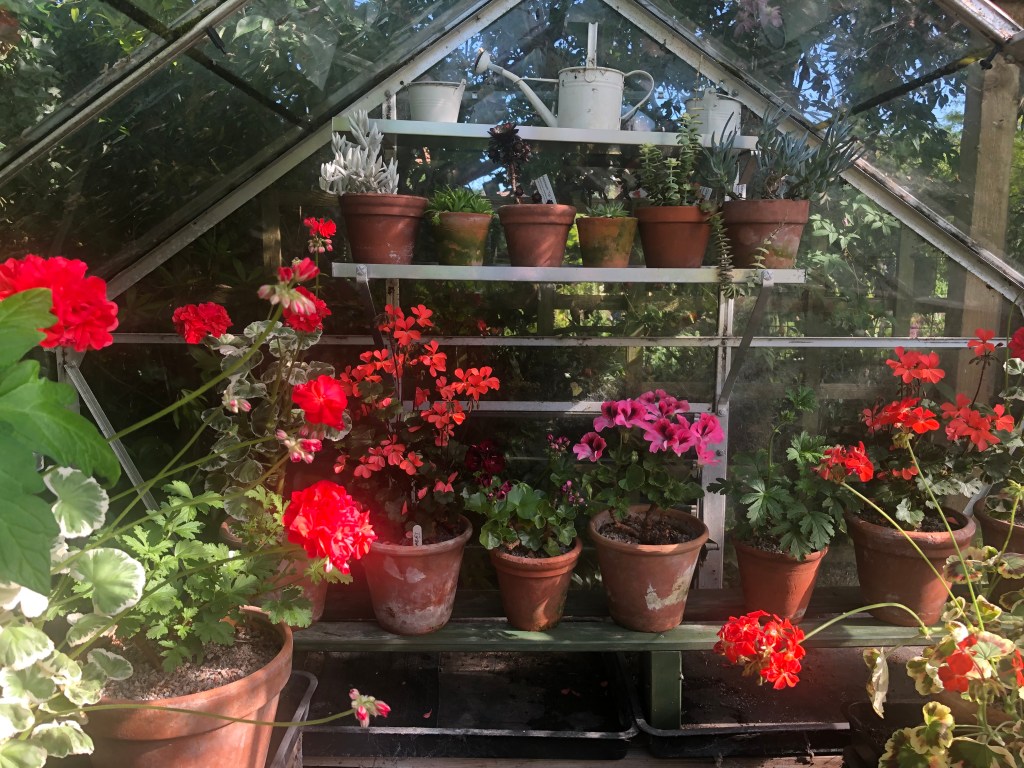
During this time of year, you can leave greenhouse doors and windows open all day and night. Just keep a bucket or can of water inside to maintain the correct humidity. Shade netting or shade paint on the greenhouse roof can help keep temperatures down. Drought-tolerant plants like pelargoniums and succulents are excellent choices for the holidaying gardener. They can survive a week or more without water. For other plants and seedlings, I keep trays in the greenhouse with an inch of water that lasts several days, allowing the plants to drink via capillary action. Anything to make life easier for your plant carer!
Before you leave, give all the plants a liquid feed and deadhead more thoroughly than usual. This will ensure you return to a beautiful display of fresh flowers!
Don’t forget to bring a gift back for your garden carer.


Helpful, well-written articles, Brian. I have been using cut and drop for several years, and while not tidy, it has been working well. Imitating what nature does make sense.
LikeLiked by 1 person
Thank you Eliza. Nature usually knows best.
LikeLiked by 1 person
How useful to get tips from a local experienced gardener! Writing in a local magazine will make any of the tips even more pertinent as our gardens are all influenced by the local conditions. Amelia
LikeLike
Thank you, Amelia.
I was a little nervous taking it on because the previous contributor was a very experienced local gardener.
LikeLiked by 1 person