
I think we should continuously review and question the way we manage our garden.
With increasing environmental pressures including changing weather patterns, reduced use of peat and a concern for the loss of wildlife especially I think the insect population which is often an essential part of the food chain, we gardeners have to be open to change.

With this in mind, these are some of the garden management practices I have either adopted over time or am now introducing into my garden.
NO DIG – NO PRUNE.
I have never dug this garden.
When we moved in, having killed off the grass in the autumn, the plants we brought from our previous garden, were then planted, in the spring, straight into the ground with just a handful of compost, blood, fish and bonemeal and then some mulch around them. I did not lose one plant. Maintaining healthy topsoil through minimal cultivation and mulching is beneficial to the plants, wildlife and the gardener’s back!
See the garden from the beginning HERE: https://brimfields.com/in-the-beginning/
NO PRUNE WITHOUT CHECKING FOR NESTS.
It is recommended to prune spring flowering shrubs after flowering. I once found a robin sitting on a nest in such a shrub I was about to prune so I walked away from doing it. I now closely inspect the shrub for a nest before pruning, if disturbed birds, especially robins, will often desert a nest.
CUT, DROP AND MULCH. (Not Put to Bed.)
An article about the Millennium Garden at Pentsthorpe Natural Park in Norfolk, caught my attention because we had visited the garden in 2012. This garden was designed by Piet Oudolf, the internationally famous Dutch nurseryman and garden designer, known for his prairie-style planting. Historically, here in the UK, gardens were said to be put to bed in the autumn by cutting everything down and removing to the compost heap. Within the Millennium Garden the many perennials and grasses were not cut down in the garden until February, to provide winter shelter for insects, and then removed to giant compost heaps. According to the article, they now cut it all down in small bites, or pieces, leaving it on the ground as a mulch, to continue providing homes for the wildlife while improving the soil fertility and water retention.
While I do not claim the blue border in Our Garden@19 to be ‘prairie planting’, it does contain perennials and grasses so I decided to experiment with cutting it down in small bites, leaving it as a mulch. I originally did this using garden shears, I now use a hedge cutter.
I added my usual mulch of leaf mould/council-recycled compost on top of this in March. I only apply a thin layer as I do not wish to smother the desirable self-seeding plants. If you have a self-seeders you do not want any more of it is worth consigning just the seed heads to the recycling bin.
I have now done this for several years, I don’t think it will suit the tidy gardener. However, the worms will work it into the soil, improving it, and the growing plants soon hide it, and we are constantly being advised that, as gardeners, we should be a little more untidy to help the wildlife.
POTTING COMPOST.
The choice of compost can be a controversial area. Legislation regarding the use of peat is driving the move to peat-free compost here in the UK with peat being banned by 2024
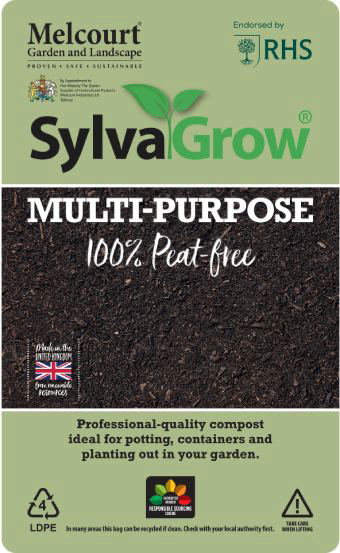
I have been experimenting with peat-free composts for three years, the first one I tried was Melcourt ‘sylva grow’, a peat-free one recommended by the RHS. It is based on composted wood bark.
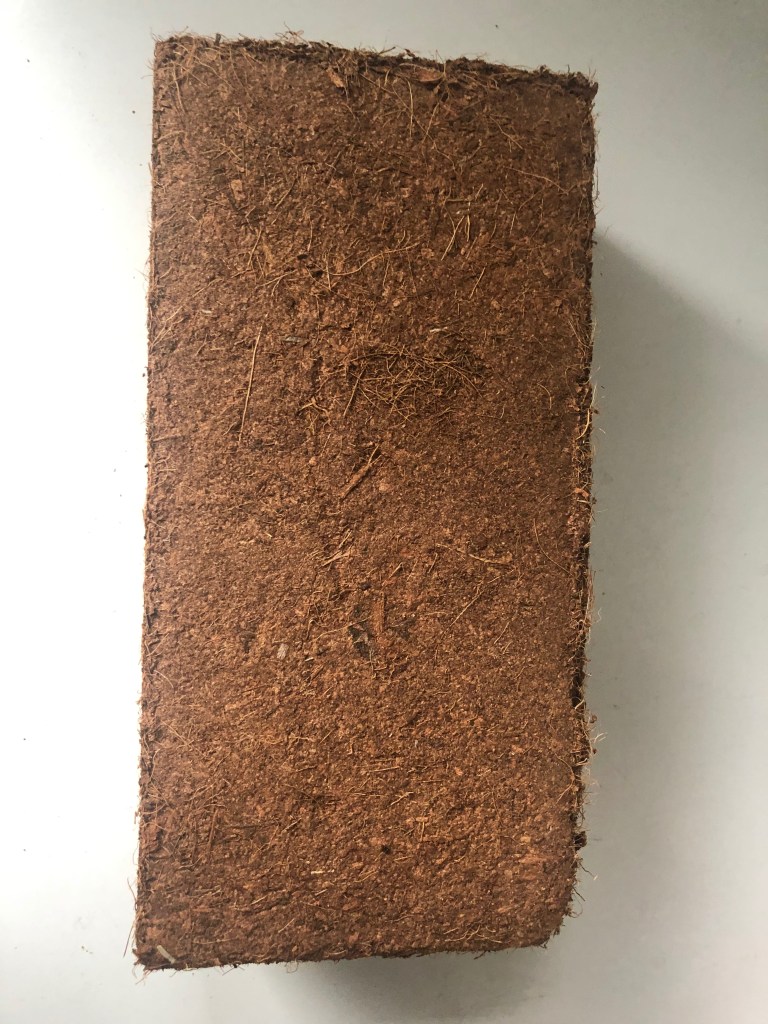
In 2023 I experimented with using Fertile Fibre, a Coir product. This is dehydrated making it light to carry and is easily rehydrated for use.
I did not find the results so good, with poor growth. I tried using a liquid feed with it but this caused dampening off of the seedlings. It was more successful when I added a third of peat-free John Innes Number 3 for extra nutrition.
I always use perlite or vermiculite in my mixes.
There is no doubt that peat-free compost requires more feed, which Number 3 provides, this may explain why some comparisons show poor results.
I do not throw away used compost it is stored in dustbins for either mulching or as a 50:50 mix when I repot plants with some added feed.
DROUGHT.
I have for two years been working towards a more drought-tolerant planting scheme for both the south-facing front border and the Blue Border the priority here was to remove the requirement to water during the summer. One of the best drought tolerant plants here is Lychnis coronaria.

This short video shows one of the new drought tolerant planted beds in the blue border with Iris Edward of Windsor, Allium ‘Purple Sensation’, Allium Nectaroscordum siculum, Cirsium rivulare ‘Trevor’s Blue Wonder’ and the self seeding Hesperis matronalis ‘White’
The front border is south-facing, in full sun, while the blue border is partly shaded by next door’s huge copper beech tree. We have four large water butts.
The iris front border.

You can read more HERE: https://brimfields.com/2023/02/24/drought-tolerant-planting-in-our-garden19/
FERTILISER.
I have regularly used rose fertiliser around the garden not just for the roses but for any flowering plant including the iris, I did believe that the formula would suit anything that flowers. I now understand that it contains too much nitrogen for the iris causing the leaf rot some of mine have experienced, so I have now started feeding them with a bone meal as recommended by Doddington for their iris beds.
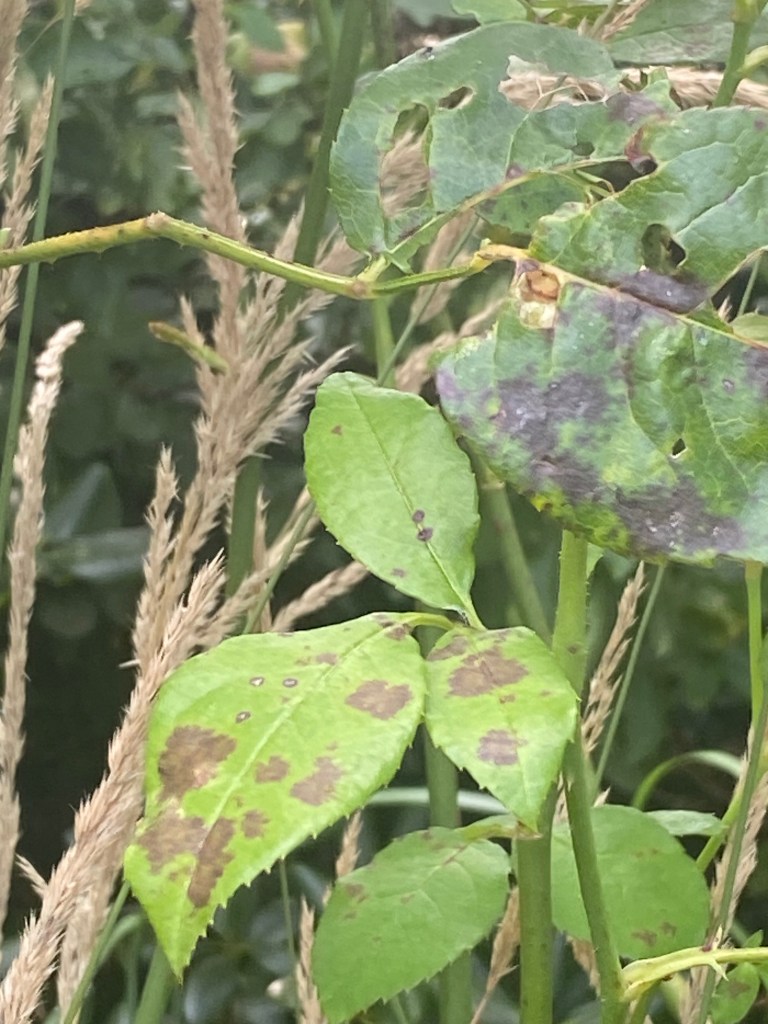
This train of thought led me to think about leaf disease in roses which in some years can be quite severe even in so-called disease-resistant varieties. While rose fertiliser is recommended by all the leading rose growers when I discovered that David Austin Roses employs all their staff to strip the leaves from their roses in February to ensure a clean start it made me wonder how disease-resistant some of their roses are if they require this to be done every spring.
Next year as an experiment I plan to feed my roses on bonemeal along with some sulphur chips to help prevent blackspot then add a good spring mulch.
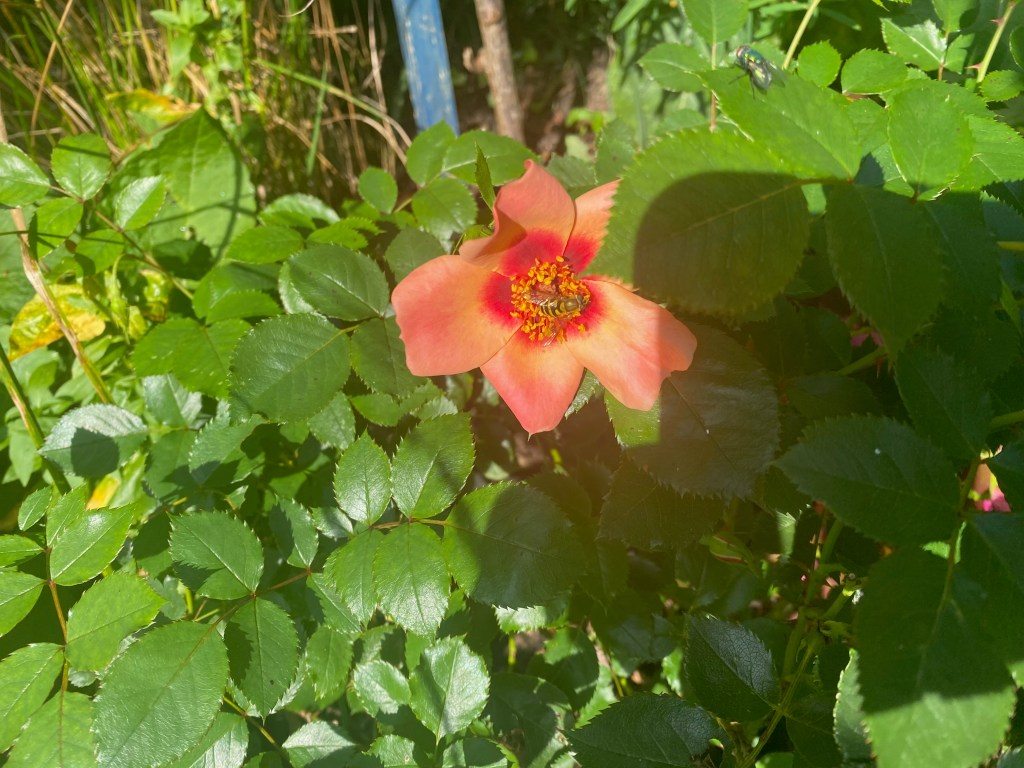
Rose of the Year 2015 ‘For Your Eyes Only’ has so far proven to be very healthy.
I use chicken pellets in the garden where nitrogen is required and liquid seaweed for pots or tonic.
EASIER MAINTENACE.
I redesigned the White and Green Garden in the winter of 2022/23 along with reviewing the planting palette for the whole garden to enable easier maintenance especially as I am not getting any younger!
I injured my right arm this spring in a fall which proved that while gardening may help keep you fit you do need to be fit to garden!
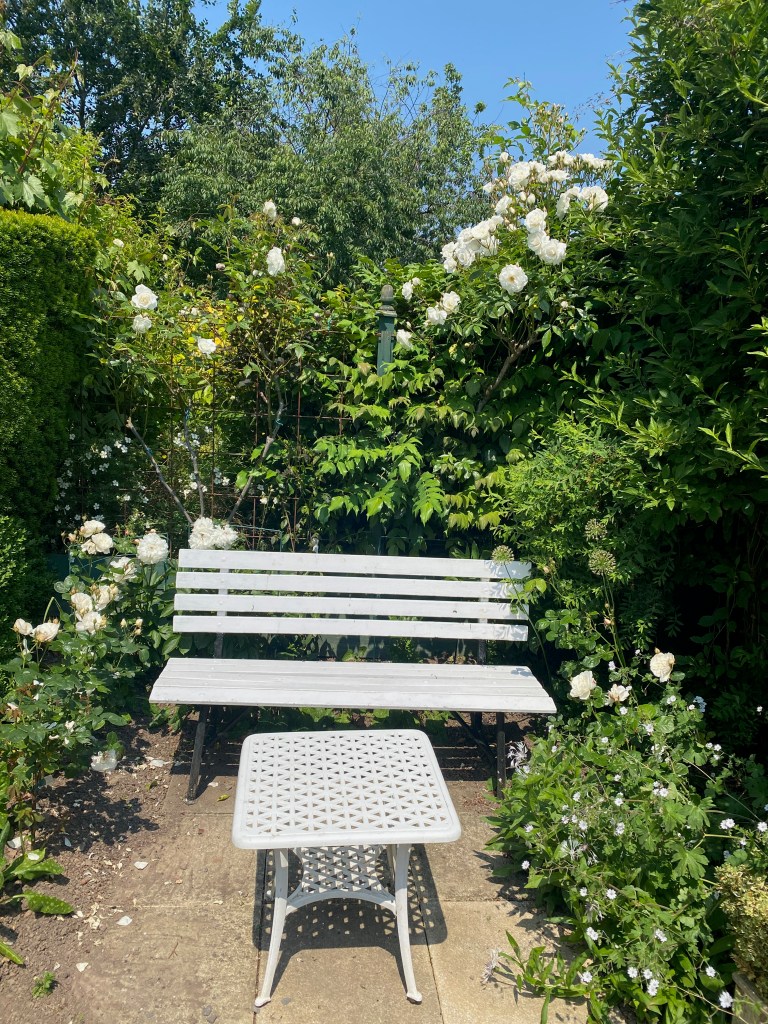
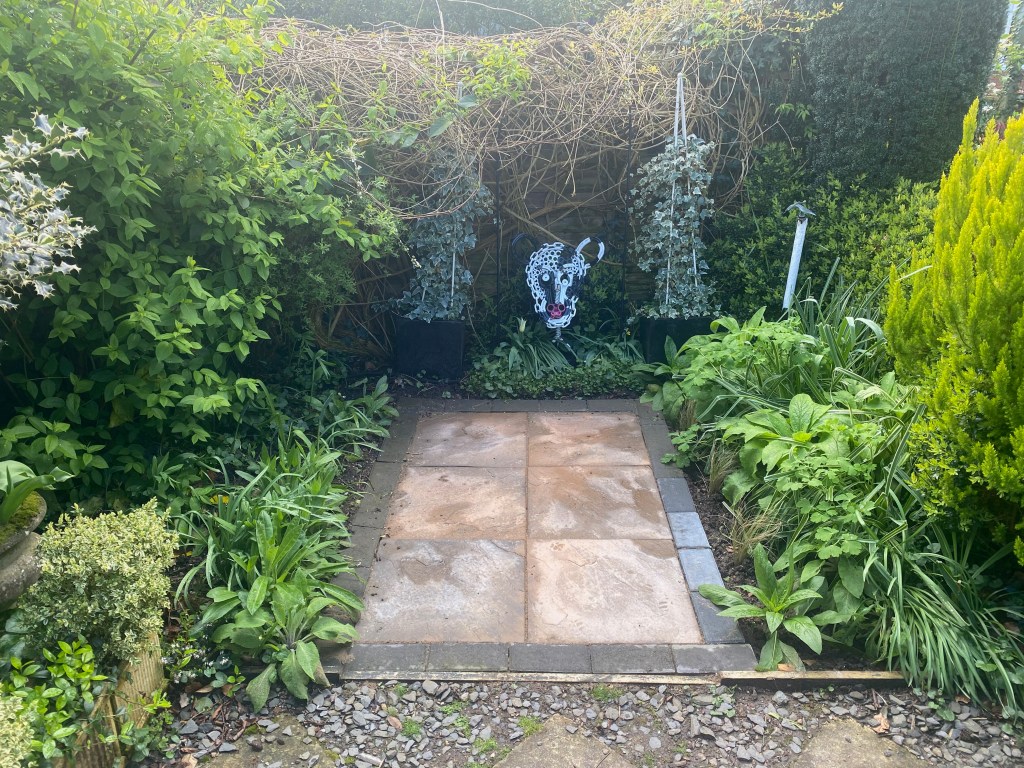
Redesigning the White and Green garden here: https://brimfields.com/2023/07/09/redesigning-the-white-and-green-garden/
Converting to all battery power tools, good for the environment and no cables to trip over.
Perhaps the most important change is to make time to sit in your garden and enjoy it.

Are you making changes to how you garden?

 brimfields.com
This is an interesting post Brian, and yes I agree with what you have written. Yes you have to be fit or well to garden, but what a great place to recover after a set back, if only it is to sit and observe, and philosophise. We have looked to increased safety, and being inspired by gardening articles, but not running out to buy large plants, but wondering how plants that are already in the garden can be propagated and used to give the effects admired elsewhere. Sharing cuttings and seeds with friends continues of course.
LikeLike
I agree Noel, I have propagated plants already happy in the garden many from seed. In trying to ease looking after the garden it often just requires simplifying the planting palette by moving plants to another area in the garden.
LikeLike
Lots of things to think about in your post. I agree that our gardens are there to be enjoyed but this year the heat kept me out of mine in summer and now it has been followed directly by monsoon like rain. I have missed it. Amelia
LikeLike
We and our gardens are going to have to adapt to the changing weather patterns Amelia.
LikeLiked by 1 person
Less tidy is a win-win for wildlife. I’ve used ‘chop and drop’ for a number of years. I don’t mind the look. I think gardeners need to adopt a new paradigm that includes insects as well as plants. Along with less lawn and use of more natives, we can facilitate the return of a more balanced garden ecology.
LikeLike
You are ahead of your time Eliza.
LikeLike
🙂 I guess so. The earth is my church. 😉
LikeLiked by 1 person
Really interesting to read this Brian. Like Noelle, I am all for propagating and sharing plants, and I have begun overwintering some of my tender bedding plants, like osteospermum and argyranthemeum. I have successfully used Fertile Fibre seed compost this year, and rely on Gardening Which? trials when I choose my compost each year. FF composts were so expensive as they were only available by mail order, and although their general purpose one did well too, so did a Homebase one which was very much cheaper, and I needed a lot of bags. They vary such a lot though, and adding extra nutrients seems to be the way to go, which Which also recommended.
LikeLike
Going peat-free is a learning process, I will go back to Melcourt we have a horticulture supplier who will deliver to the house if bought in quantity, it is also stocked by a local nursery although for a bit more money per bag. I think the FF blocks are cheaper than their compost but then you have to buy extra nutrients to add to it.
LikeLike
Yes, I remember you used to get a bulk delivery. Certainly with the Fertile Fibre the more you got, the cheaper it was, and I get through a lot of bags of the multipurpose compost, so I ought to check out how much it would be in bulk – it’s then having somewhere to store it!
LikeLike
Yes, storage is a problem here!
LikeLiked by 1 person